The Great Sphinx of NVIS

Spurred on by my Tri-Link antenna design and the tuned, elevated ground radial concept, I thought about a 40M NVIS version. I had been thinking about this for while and when got to looking at the over all shape of this thing, it reminded me of the Great Sphinx of Giza!
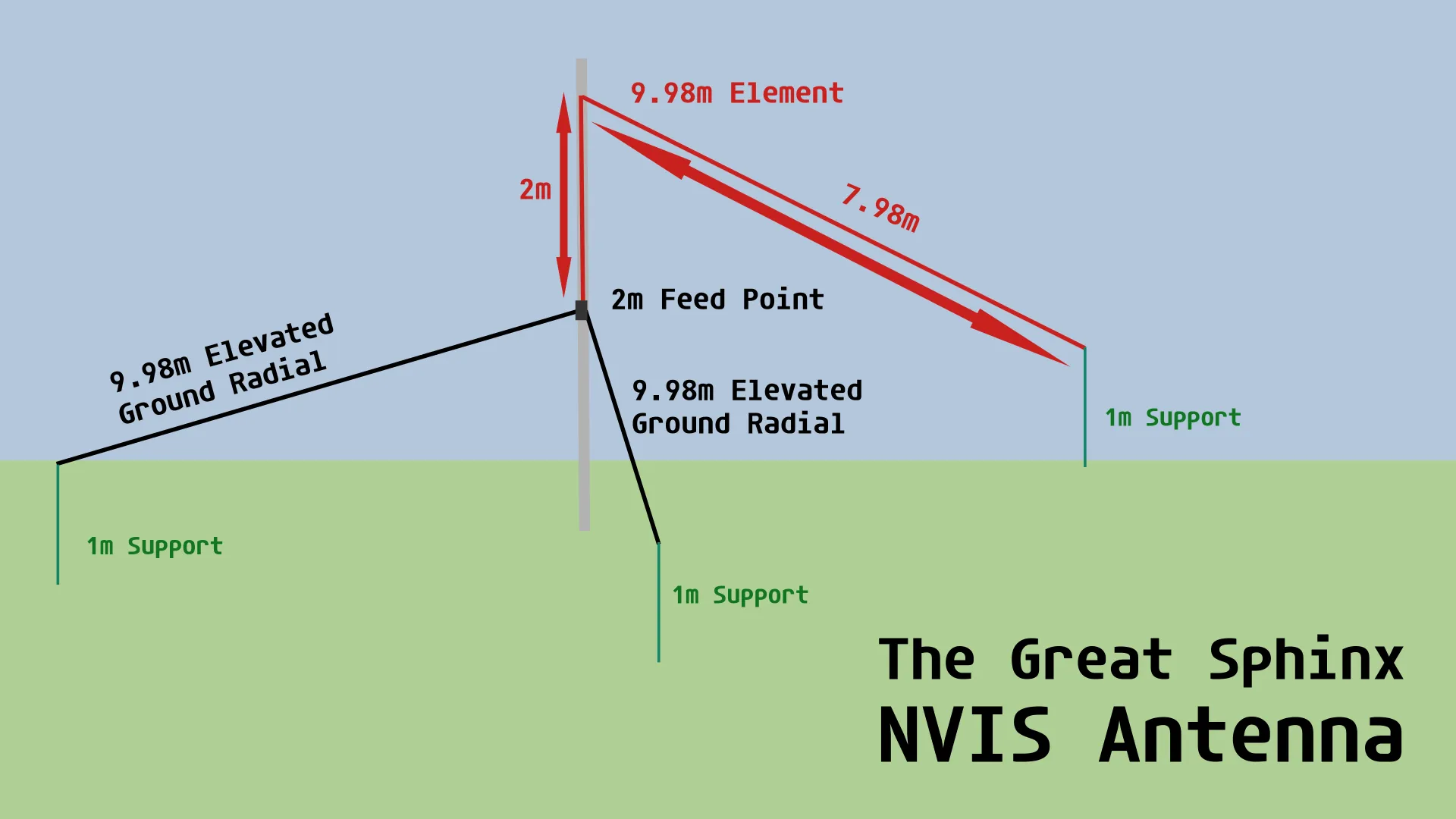
The crazy thing is, this antenna was pretty much already dreamed up by Greg KJ6ER as an adaptation to his POTA PERformer antenna. Our designs aren’t exactly the same but it’s very close. You can email Greg and get all of his antenna designs.
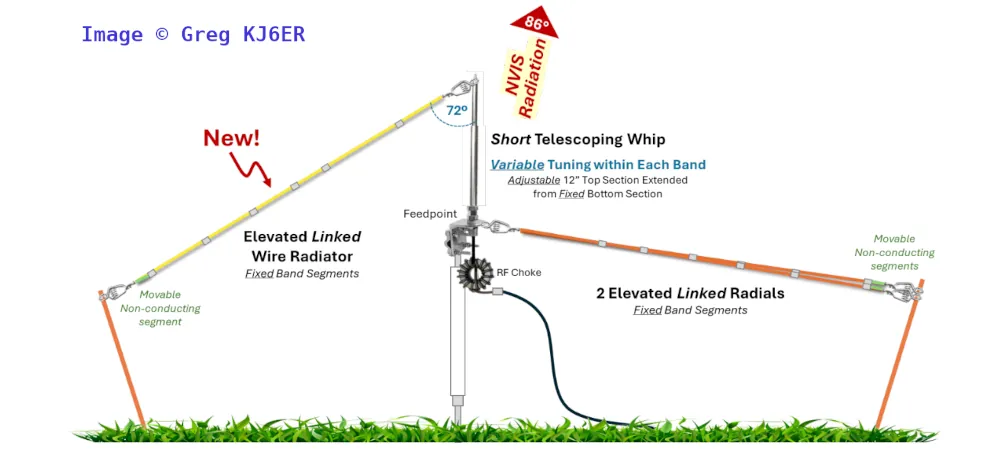
My version is completely made of wire and I deployed the elevated radials about 90° apart whereas Greg recommends the radials should be placed close together and used in conjunction with an adjustable whip.
The Build
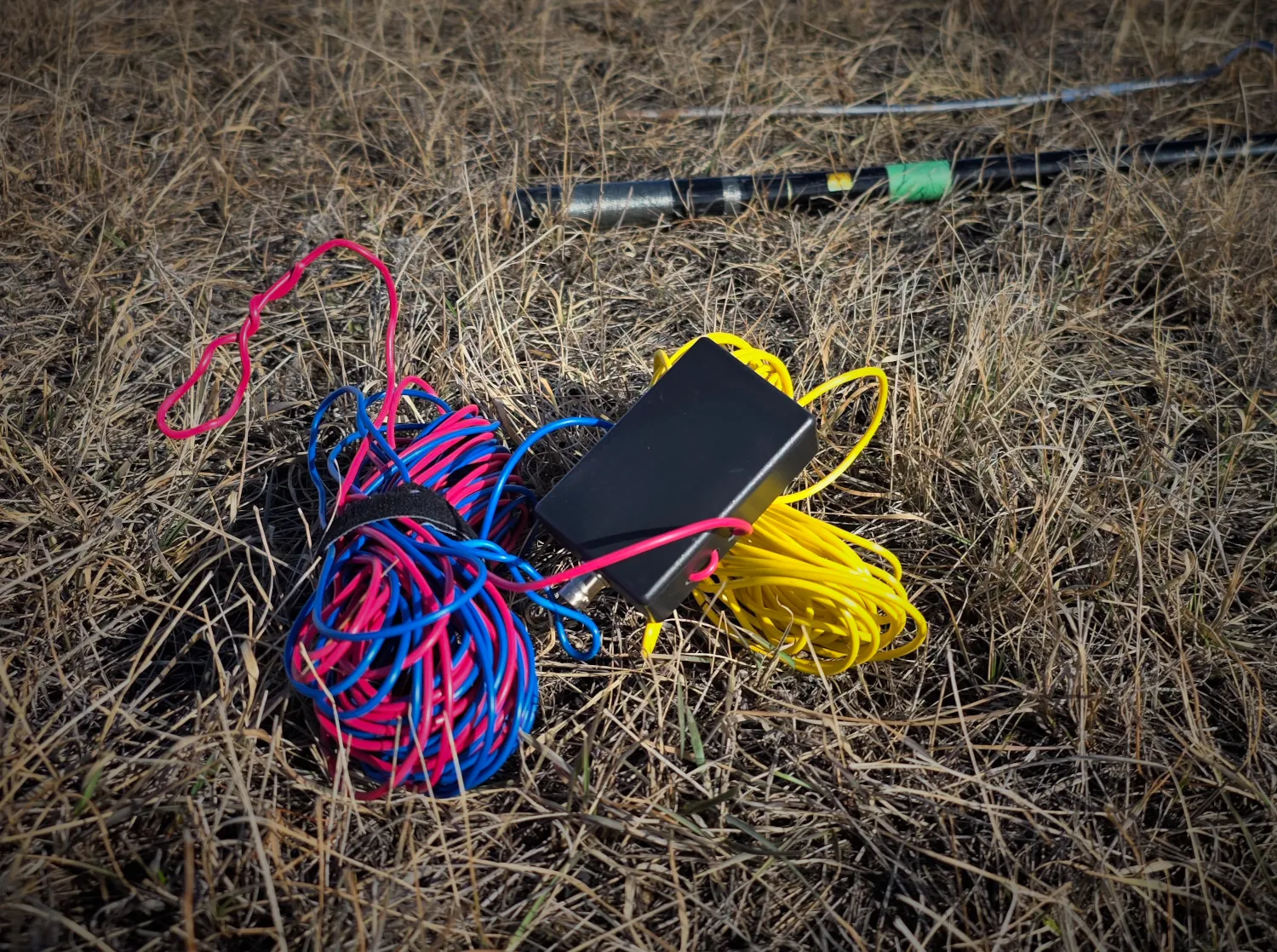
This build follows the same concept I used with the Tri-Link. It has a little plastic project box to accommodate the BNC connector and the wire connections. The main radiating element is connected to the BNC center while the ground radials are soldered together to the BNC ground.
I cut all three wires the same length, around 10m. I had three different colors of 18AWG in stock so I used them. It’s a simple trick for wire antennas but makes life atleast 17% easier when trying to figure out which wire goes where. In this case red and blue were the radials and yellow was the main radiator.
The Deployment
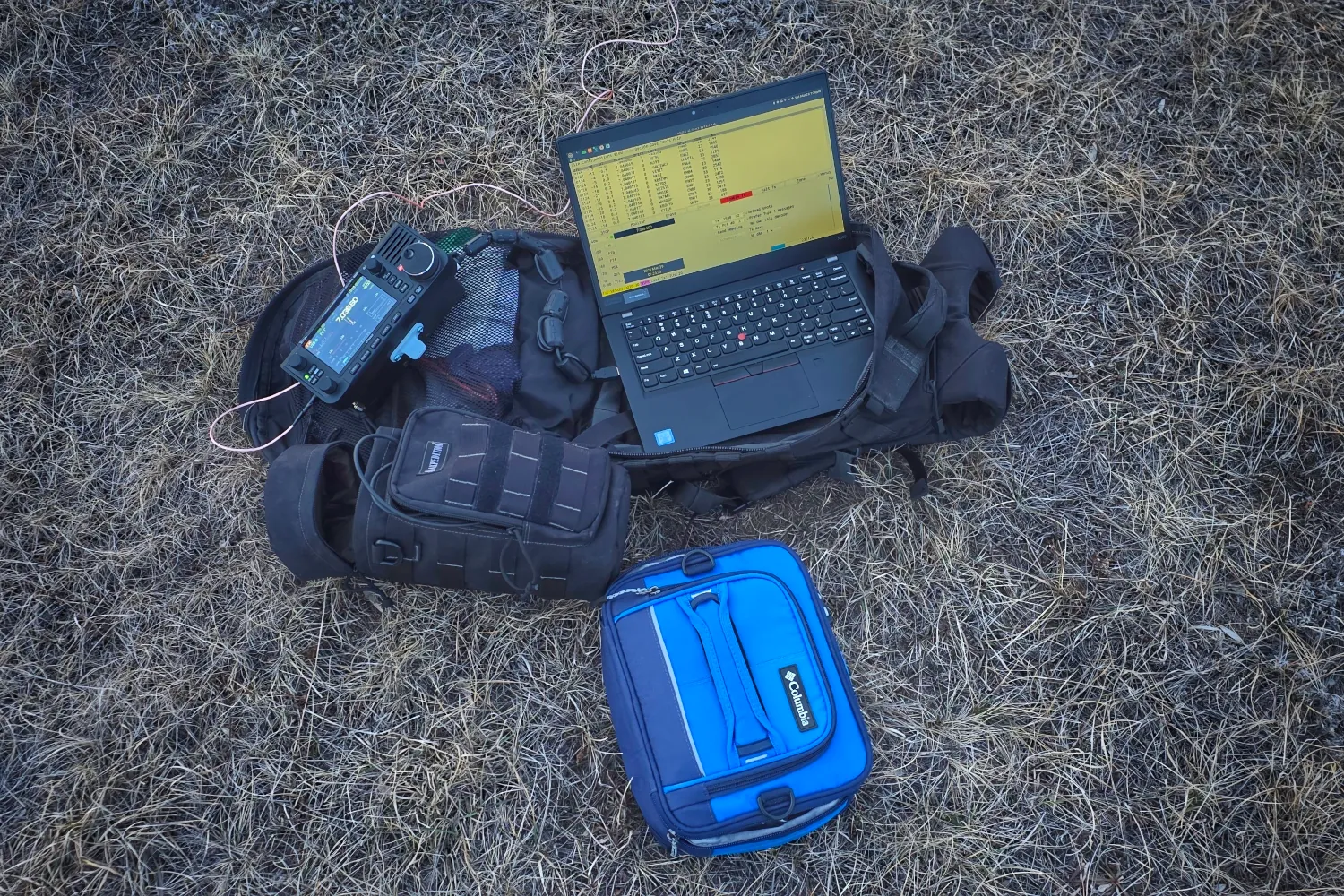
Because this is for NVIS propagation, you don’t need a very tall mast. Even a short tree would work. I used my old broken crappie pole ‘mast.’ I put a paracord loop up at about 10’ high for the radiating element to go through. The box was secured to the mast with a ball bungee at about 6’ high. 3’ electric fence posts supported all three wires.
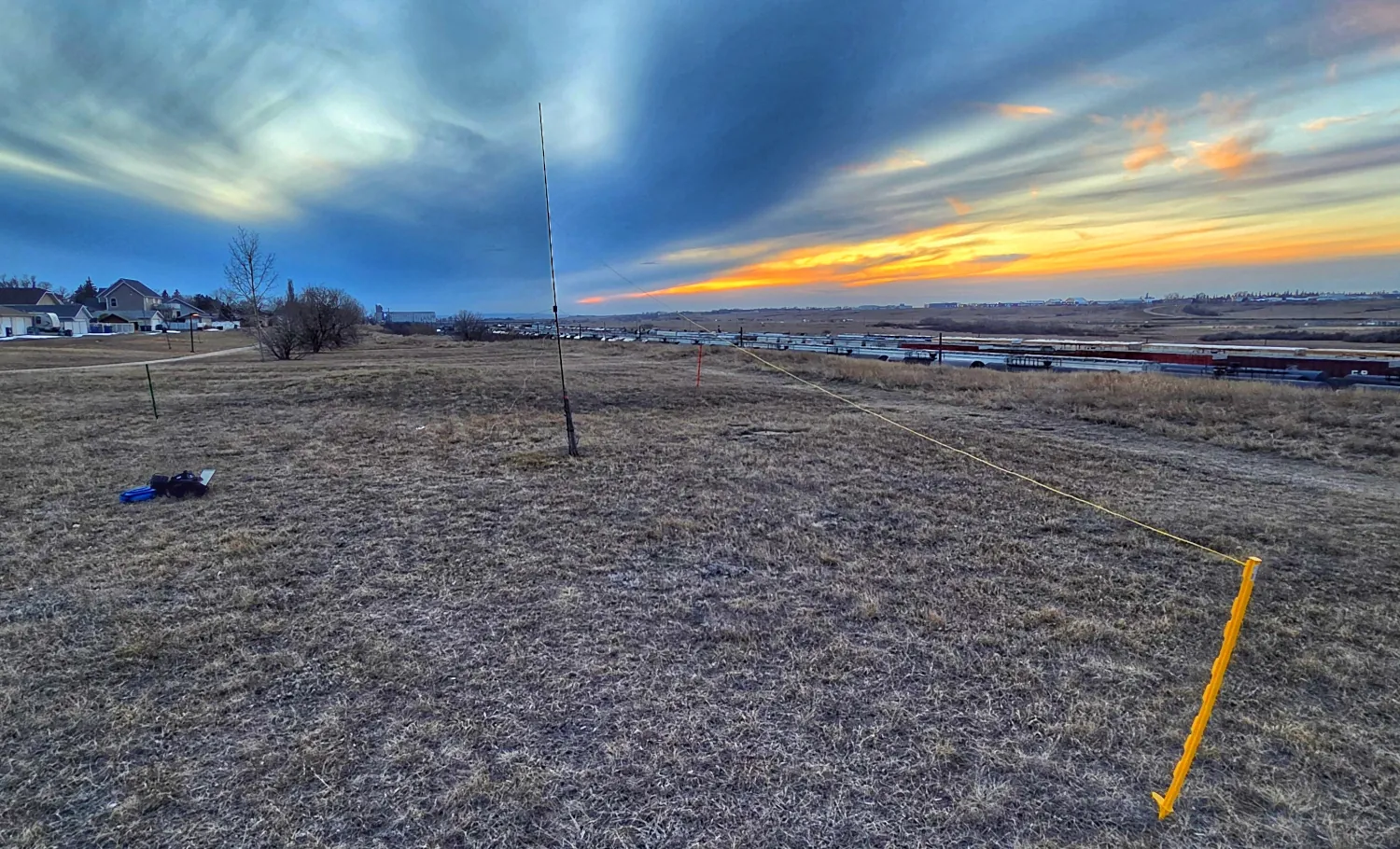
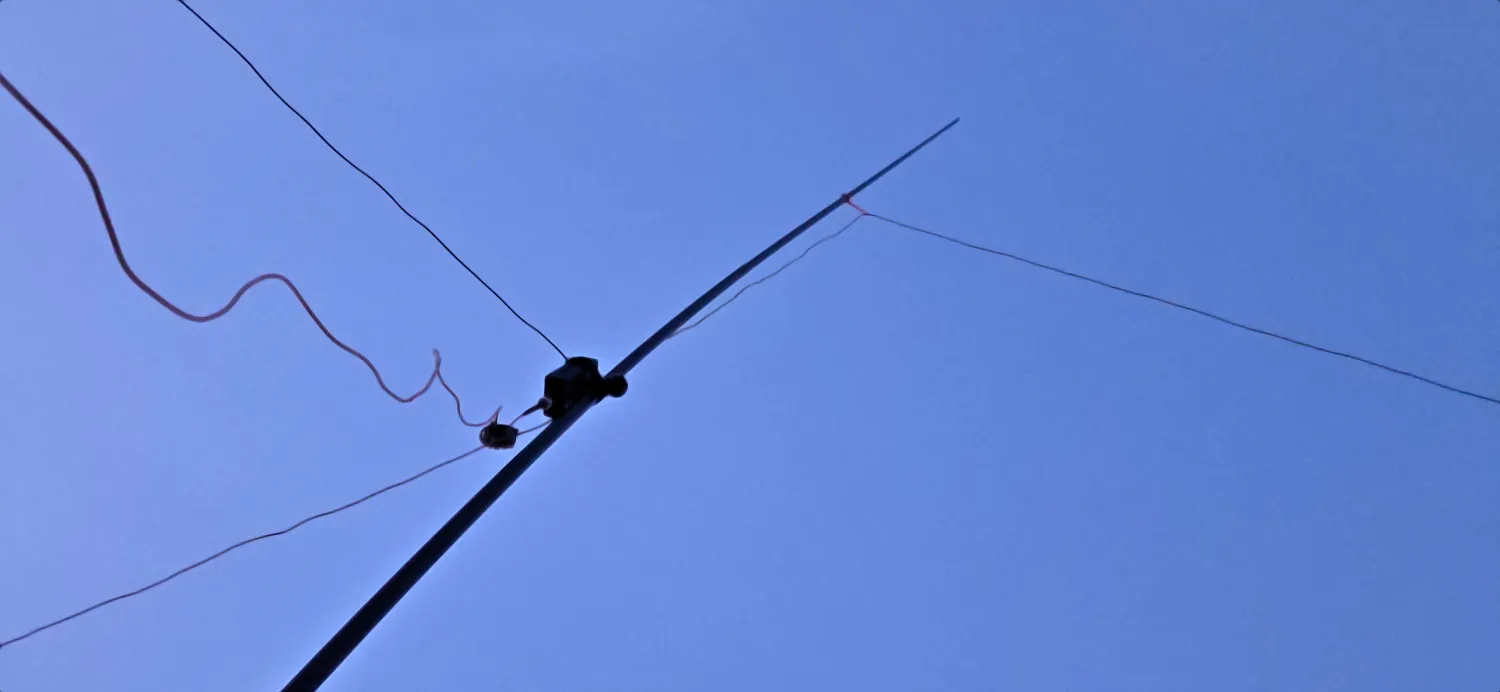
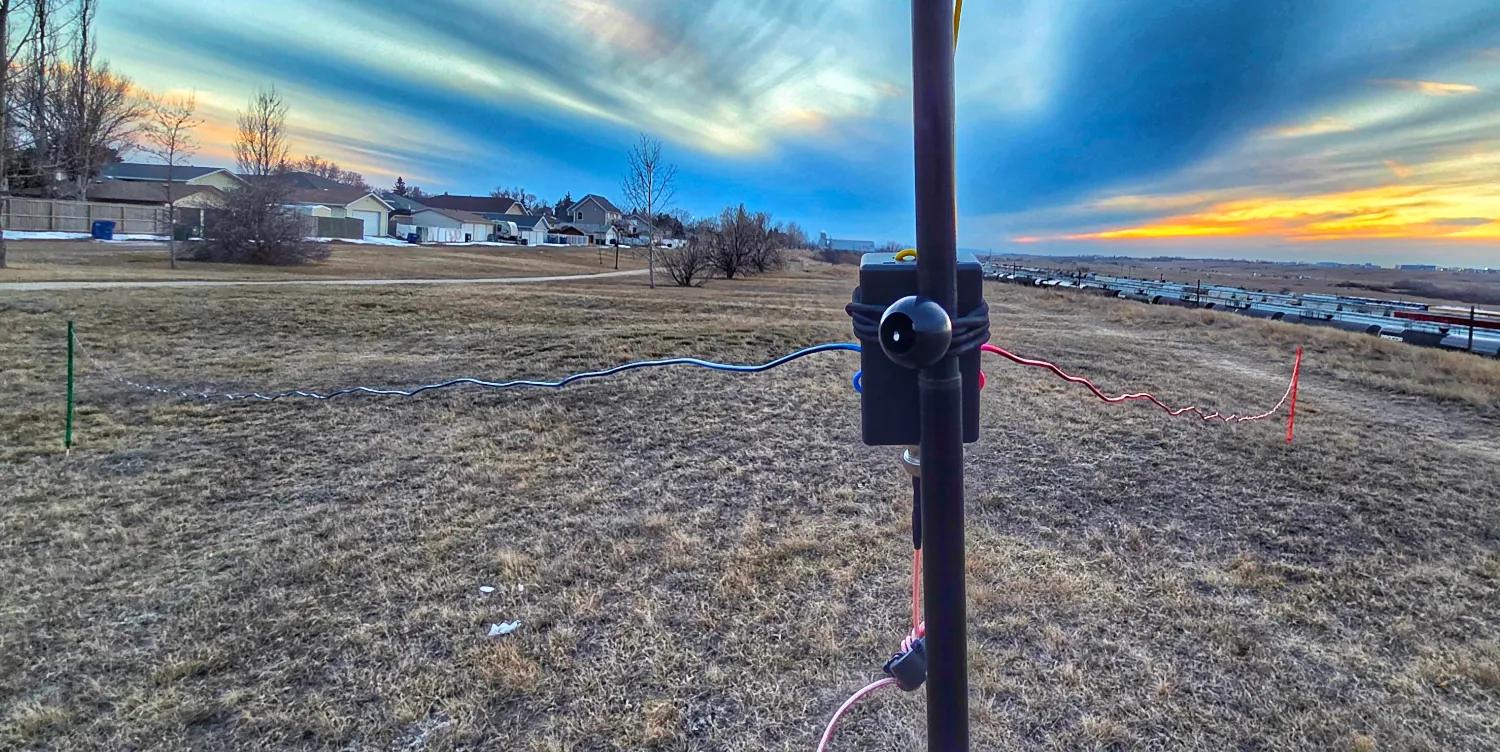
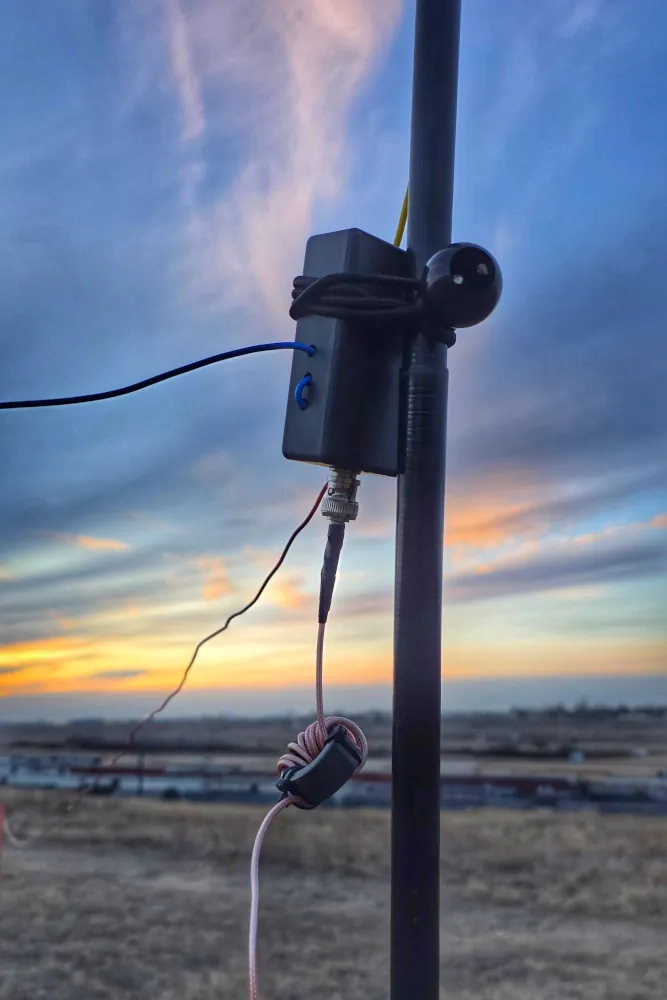
I fed it with ~25’ of RG316 coax with a choke at the feed point.
Testing
NanoVNA Sweeps
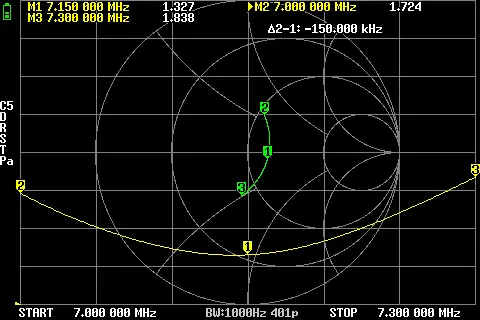
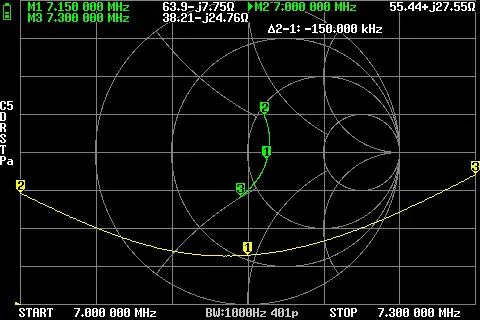
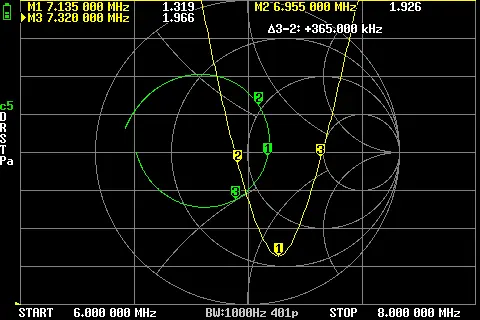
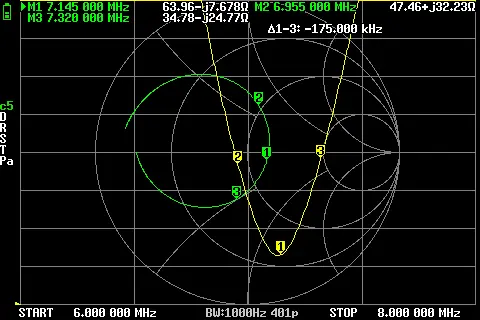
I did the initial test and tune and it was really close right out of the gate. I trimmed a bit of wire off all three to bring it in to resonance. The entire 40M band was 1.8:1 and under for SWR. Not too shabby.
WSPR
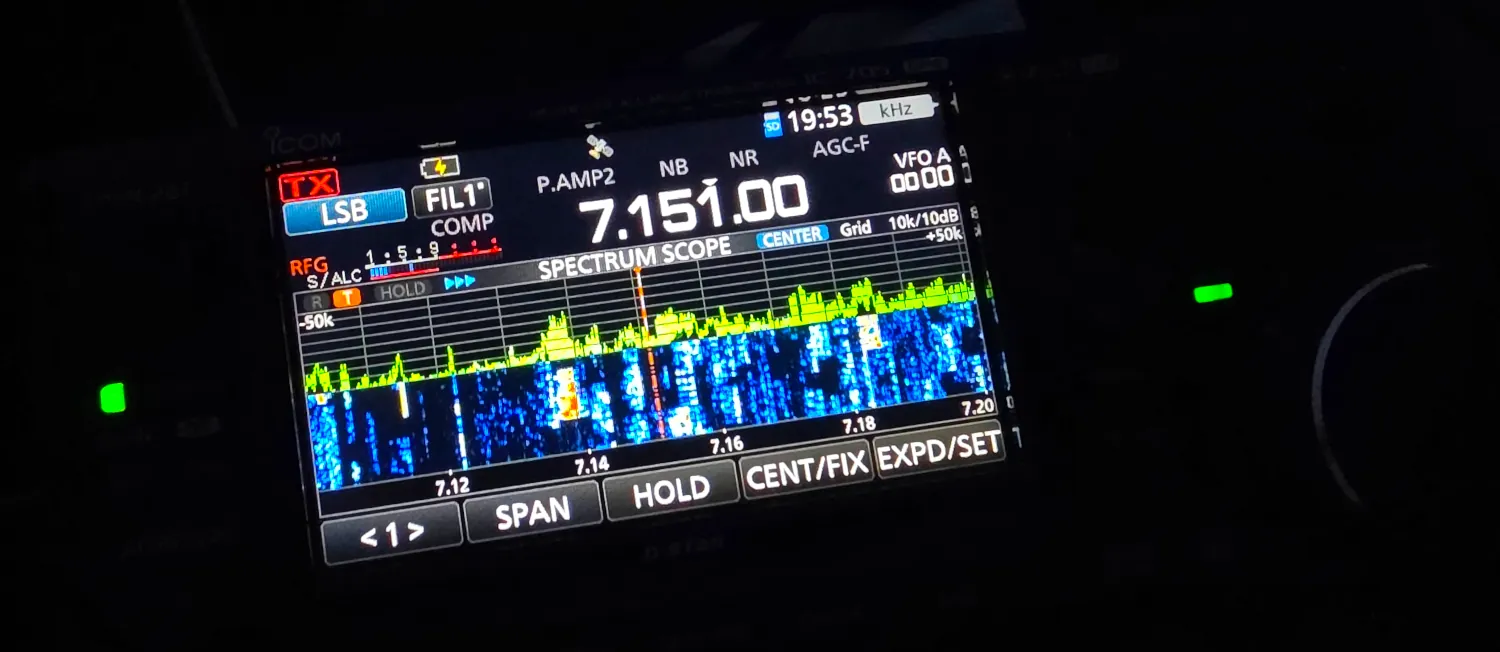
I waited for twilight before running my standard 20 minute, 1 watt WSPR test. The antenna was deployed East-West with the main radiator to the East and the ground radials towards the West.
DATA:
| SNR Max | SNR Min | SNR Avg |
| +10 | -29 | -15 |
| KM Max | KM Min | KM Avg |
| 2,957 | 202 | 1,499 |
TOTAL CONTACTS: 273
TRUE NVIS CONTACTS: 30 under 700km in SK, MB, AB, MT, ND
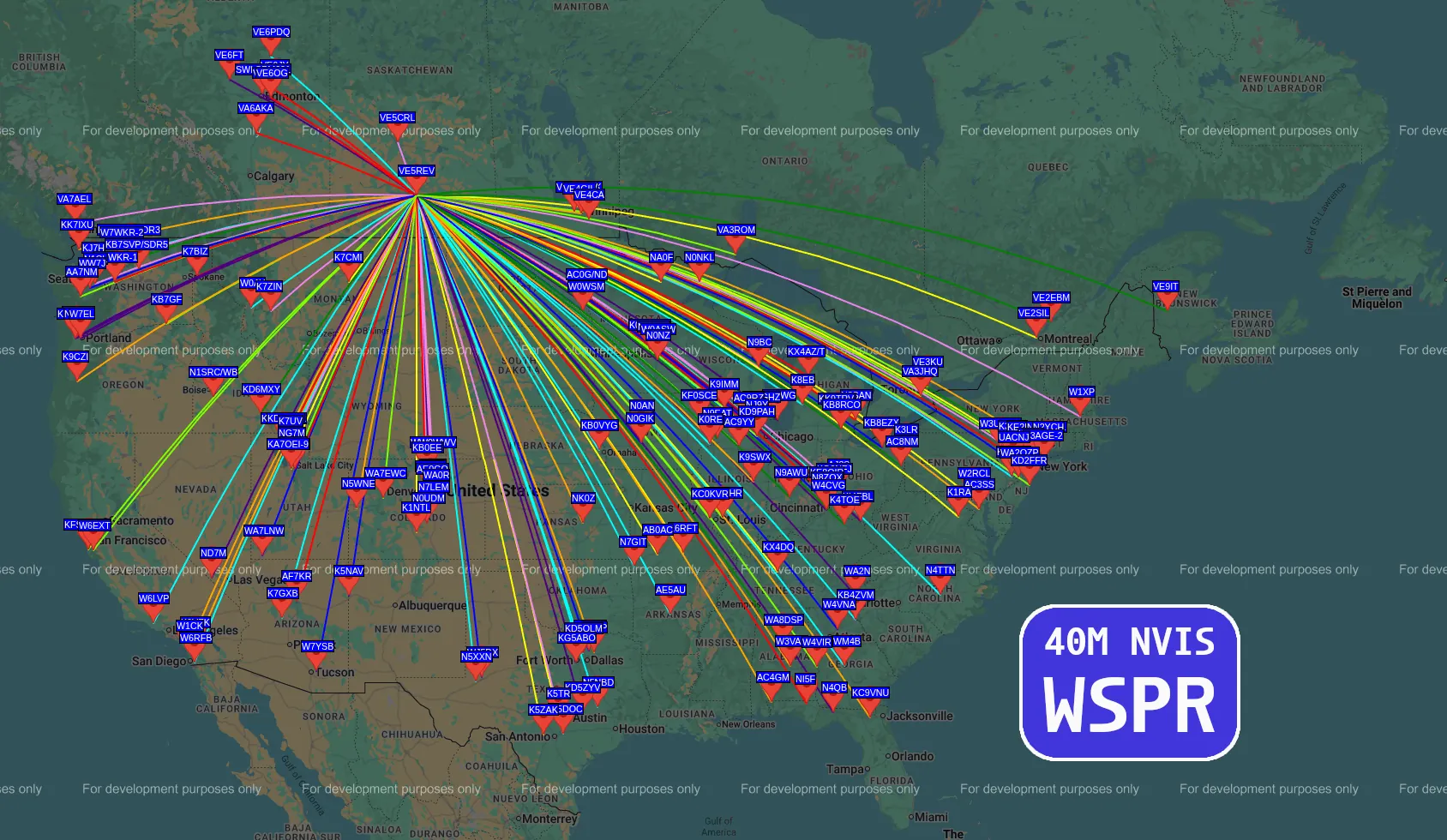
I was totally blown away by the WSPR results! It gave a very even, omnidirectional pattern which was anticipated. I had coast-to-coast coverage in Canada and the USA. And, low and behold, a decent number of true NVIS contacts under 700km.
Conclusions
I’m really happy with the results from this test. The antenna accomplished its goals. It’s super easy and fast to deploy. It would be pretty impervious to a big wind load too. The question remains though: how would this compare to a good ol’ inverted vee dipole?? Is this design worth the extra 10m length of wire? That remains to be seen.
73 de VE5REV