VDA - Vertical Dipole Antenna

Salty Walt, K4OGO, had made a Vertical Dipole Antenna for his operations along the beach. I was thinking about making one for myself, with DX and POTA in mind. Just think, all the performance of a Vertical antenna without the mess of ground radials!
The Build
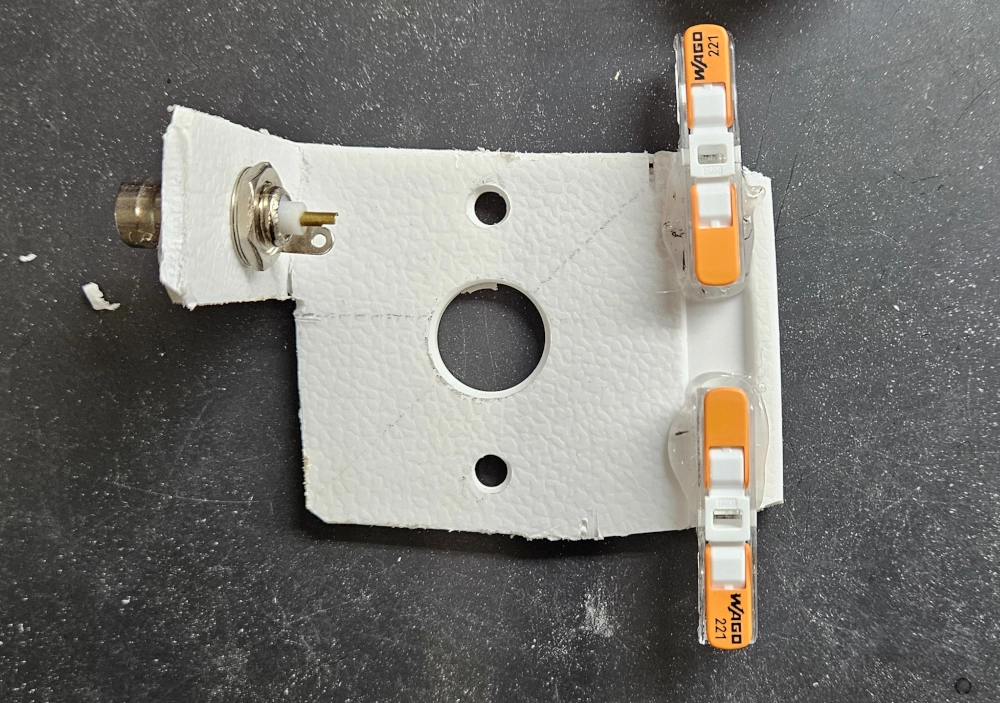
The challenge with this build is making sure the center choke balun stays put in the middle of the mast. I got a chunk of leftover cutting board and went to work making a mounting point that can accommodate the Type 31 ferrite core (Size: 0.870” (21.70mm)OD. Core: 2631801802), BNC connector and the Wago lever nuts. It ended up being quite light weight which is good.
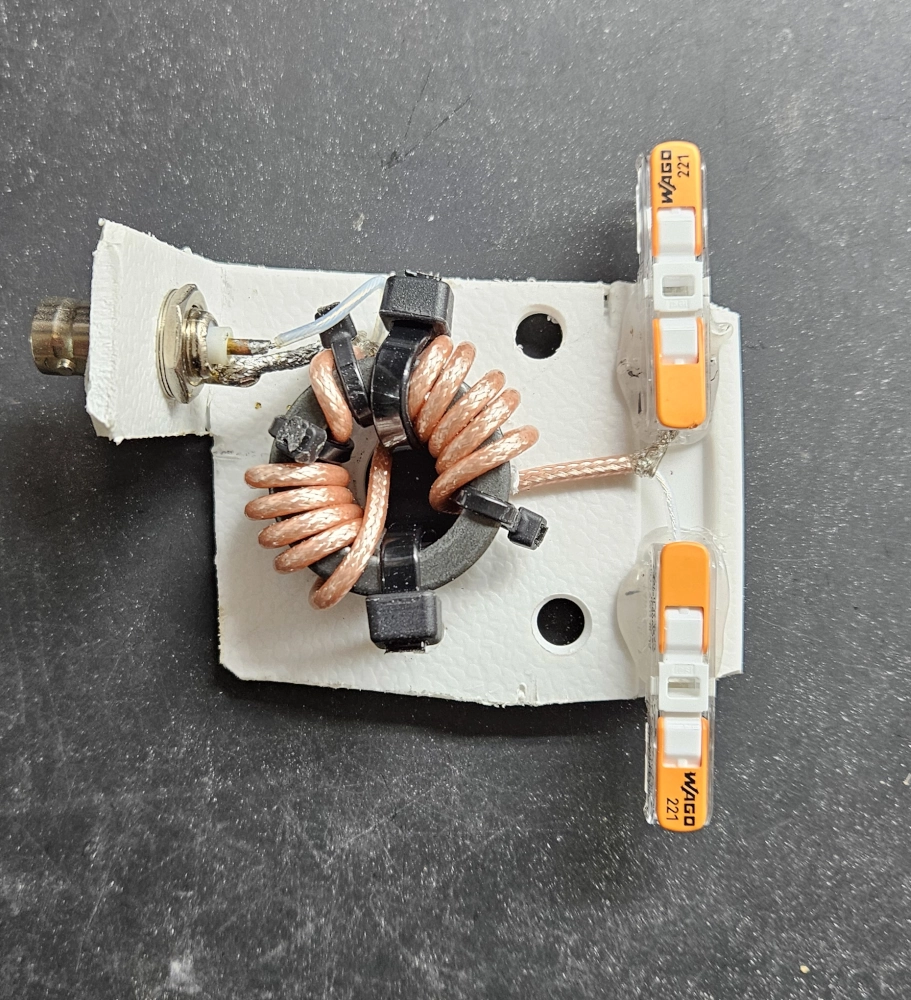
I wound the choke balun with 10 turns of RG316 and soldered everything in place. I used some zipties to hold the balun to the cutting board.
The Wire
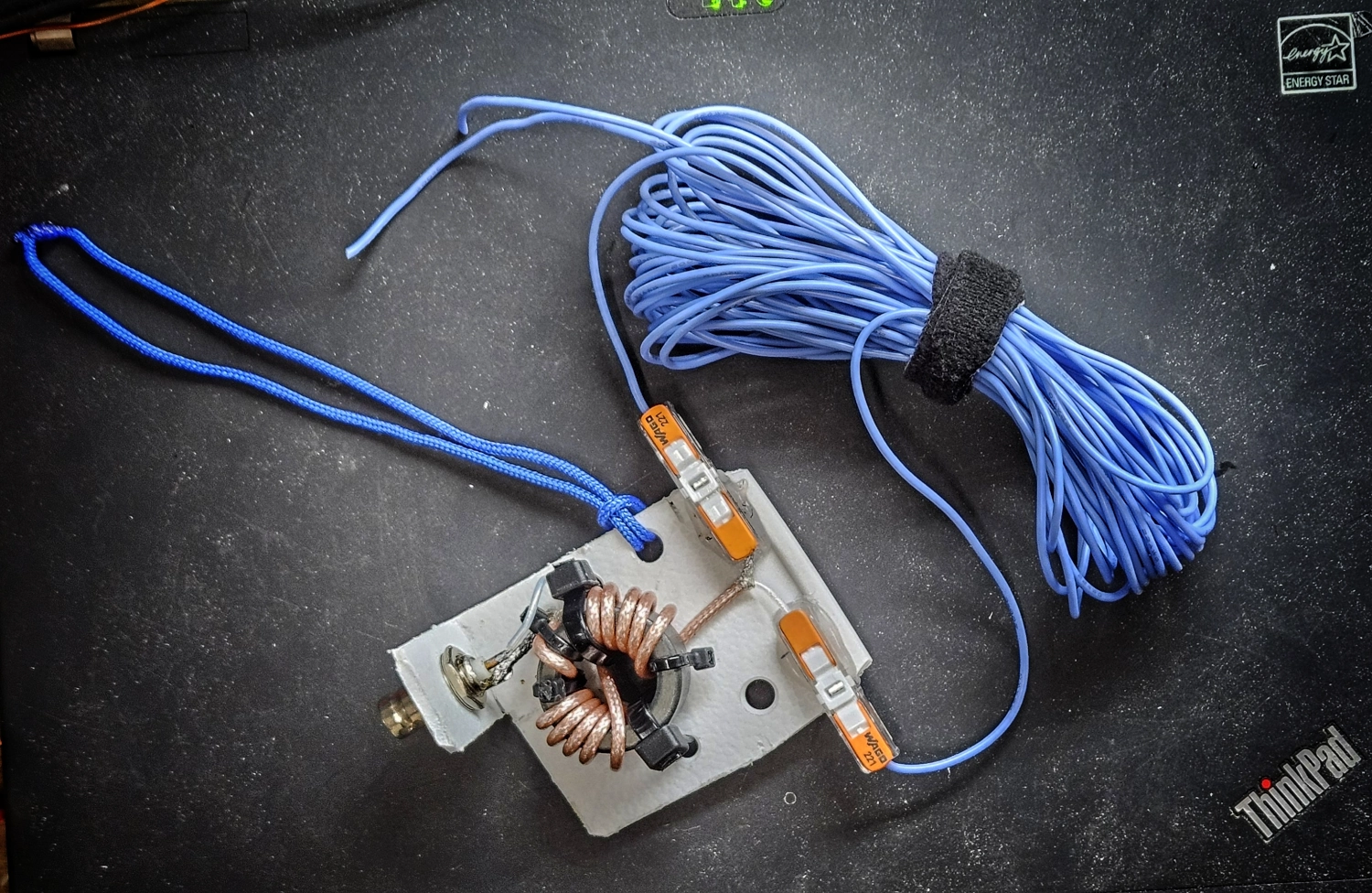
I had some old BNTechGo silicone wire up in the cupboard so I measured out the elements for 17M. I cut the radiators a bit long and then pruned to resonance. Use the DX Commander SWR calculator to make your adjustments, it’s actually pretty close! That link will let you download the MS XL File. In the end I didn’t use the paracord holder, opting instead to use a wire tie to hold the feedpoint to the mast.
The Deployment
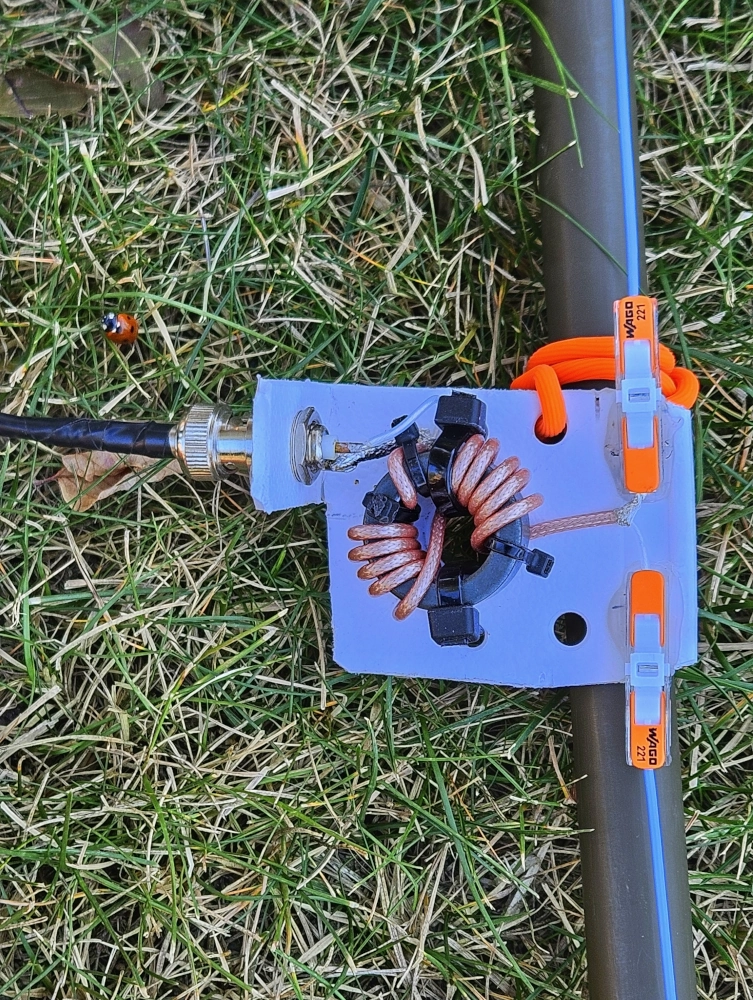
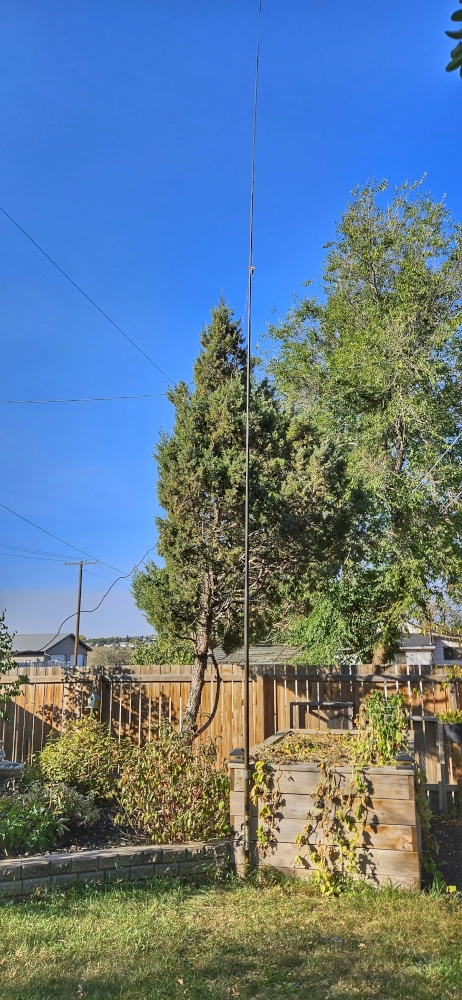
I setup the DX Commander Expedition mast to it’s full size and laid it on the ground. Starting from the top I used electrical tape to fix the top antenna radiator to the mast. Then I connected it with the Wago nut. Then using the orange wire tie I fixed the center the mast. Then I simply connected the bottom radiator and stuck in place with a couple more pieces of tape. I connected the coax and stood it up in the backyard. I tried to make the coax come out straight from the center as much as possible to prevent interacting with the lower radiator.
The NANO
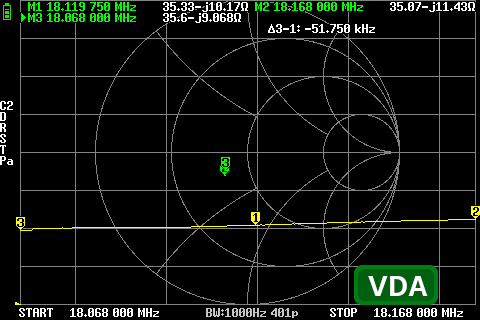
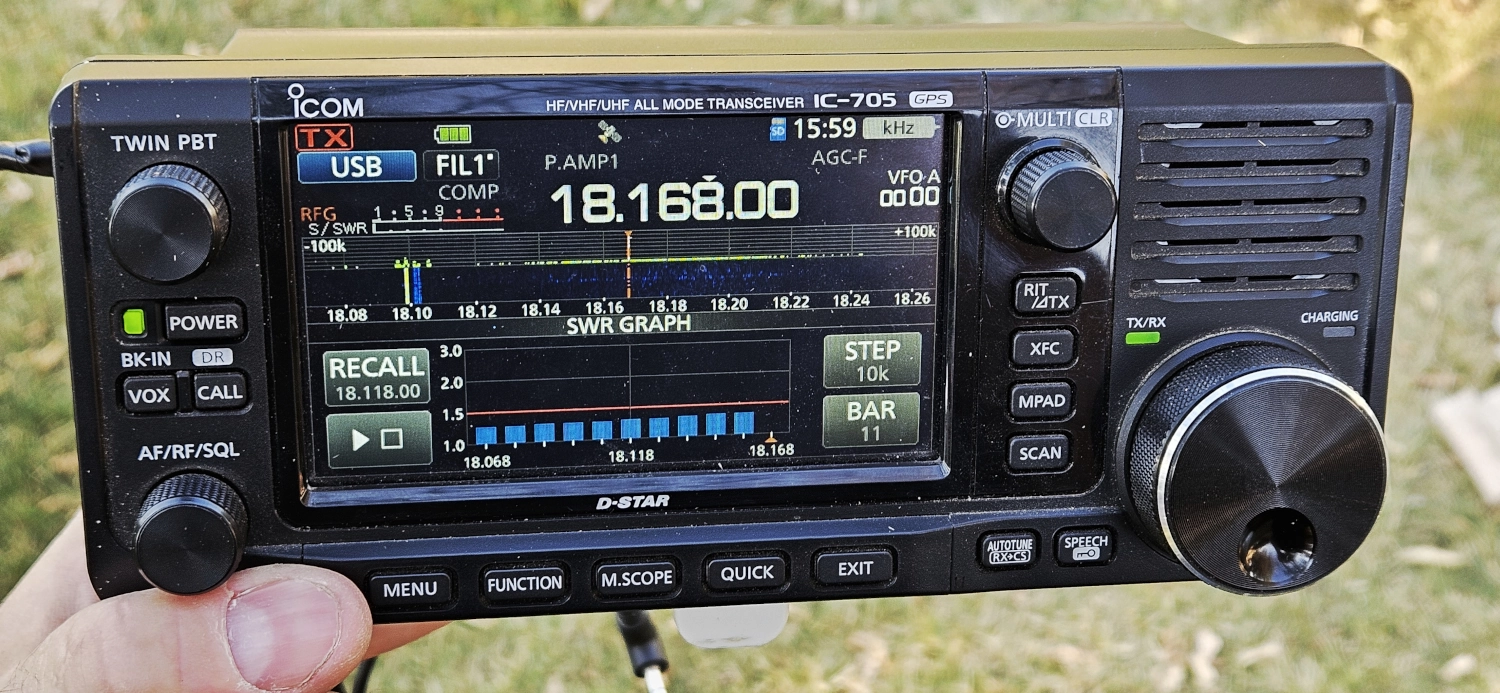
Prune n’ tune was a breeze and it worked out pretty well. The SWR is pretty much 1.5:1 across the band. The Smith chart readings show that it’s a bit capacitive and I this is just the general mismatch of the dipole antenna. They say dipoles are 72 ohms and the coax is 50 so you are going to have this little smidgeon of difference. 50-12 is 38 and that’s about where this antenna is at. 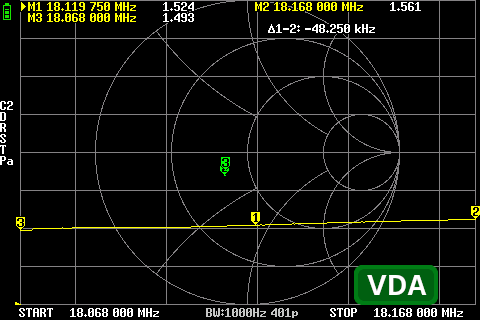
Testing
It was greyline so I wanted to do a WSPR test. I set the IC-705 to .5 of a watt to really test and see how well this would perform with the advantage of greyline. It’s absolutely outstanding! This 20 minute WSPR test was performed from my urban backyard with trees and buildings and stuff all around. I was blown away!
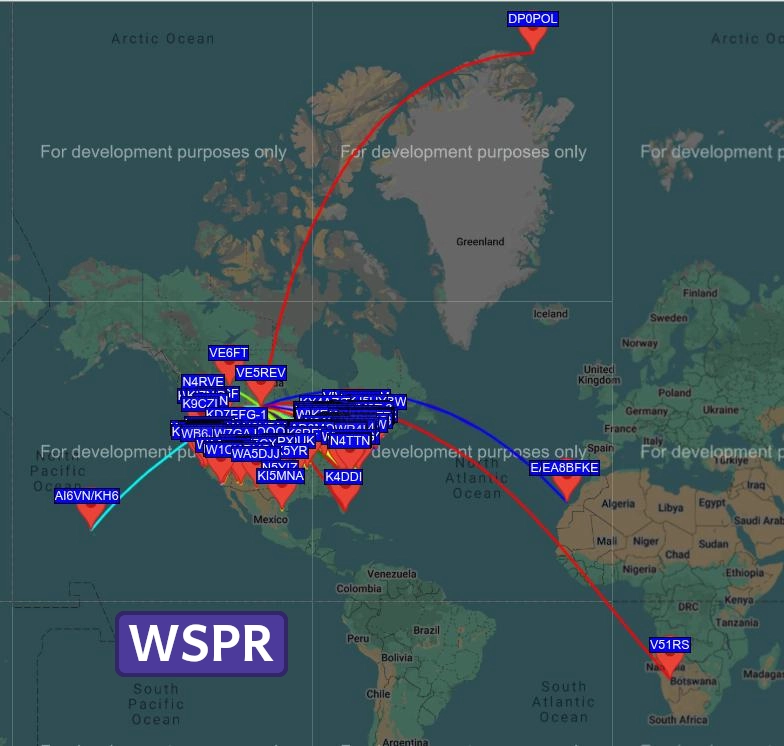
Contacts: 421 WSPR
SNR: -30M Min; +11 Max; -13 AVG
Distance: 699KM Min; 14,228KM Max; 2,357KM AVG
It had very nice, even coverage around North America, very typical of a Vertical Antenna pattern. Very nice bubble of RF.
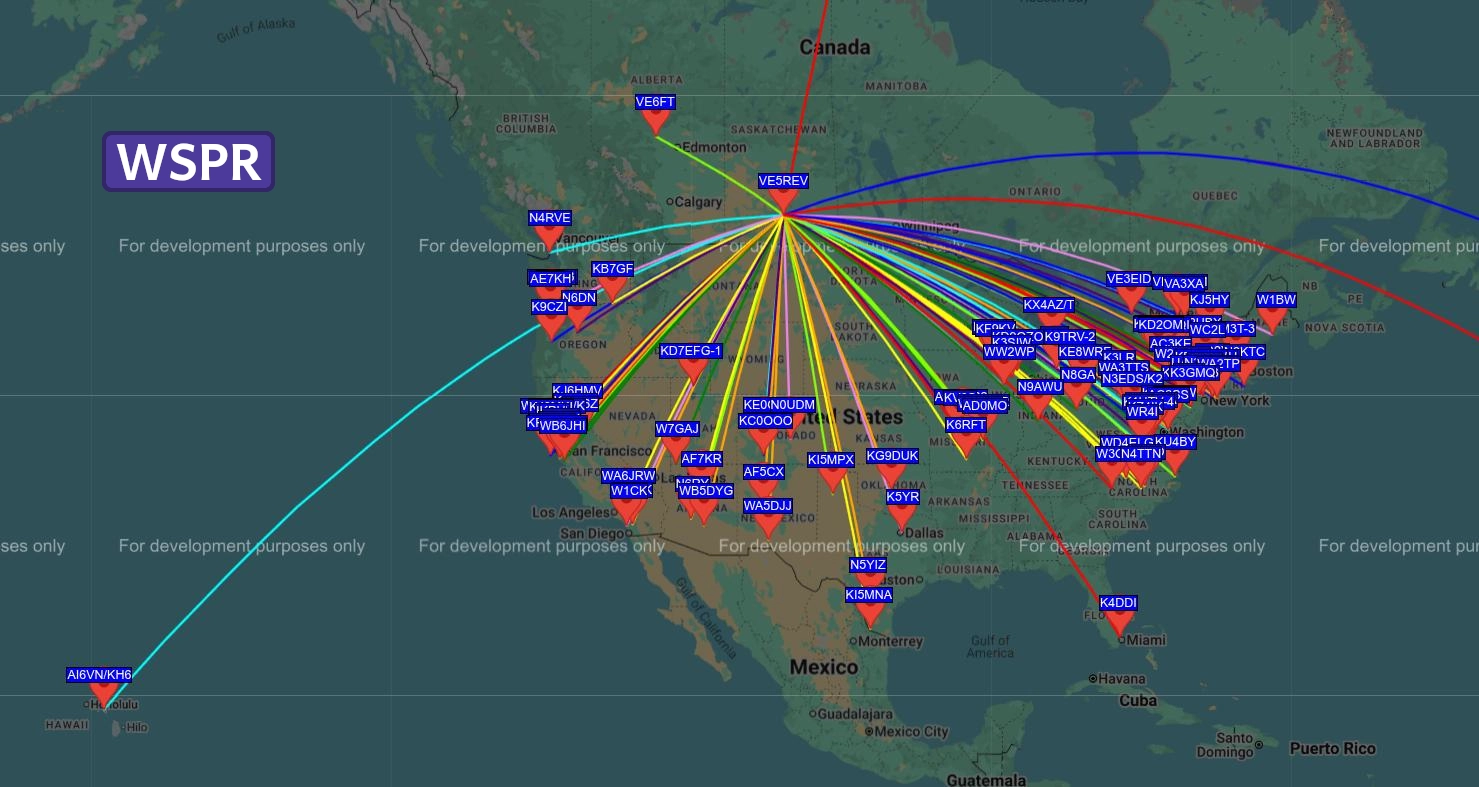
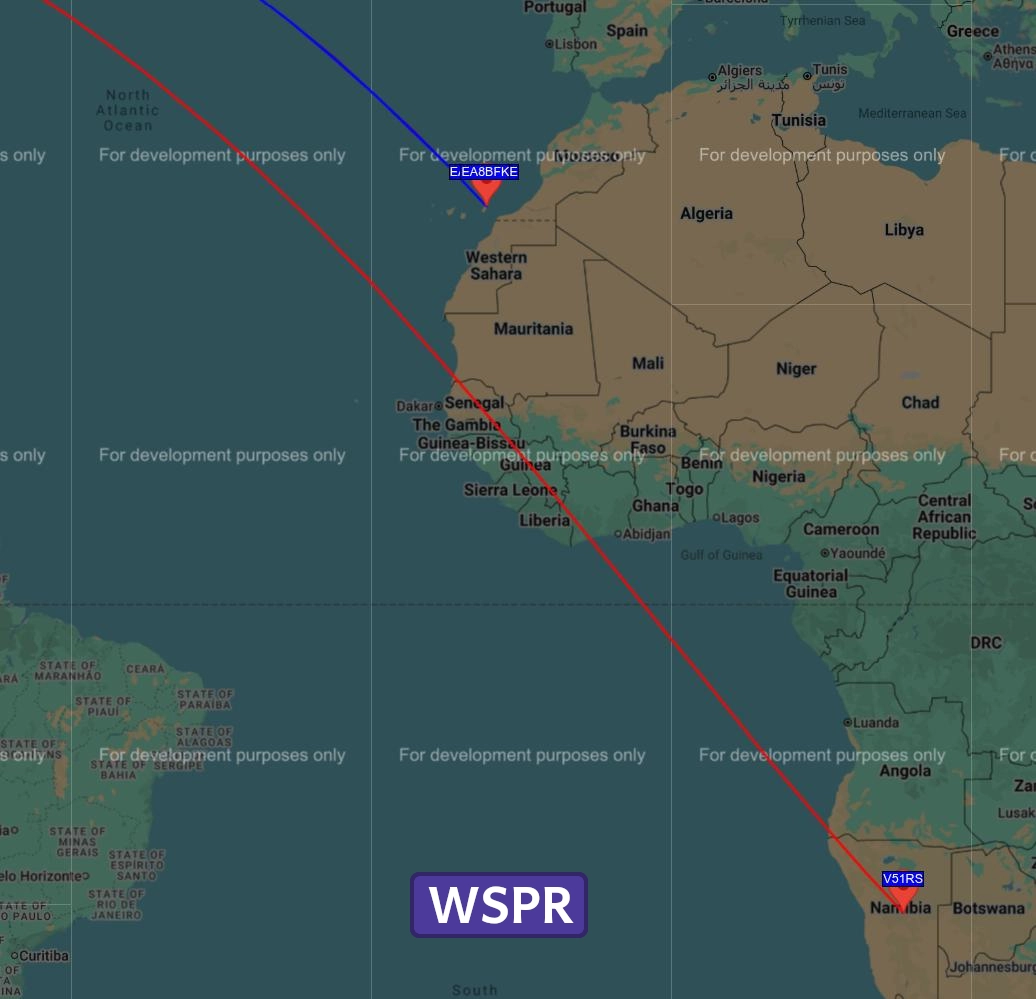
And, as I had hoped, we got some really cool DX stations too!
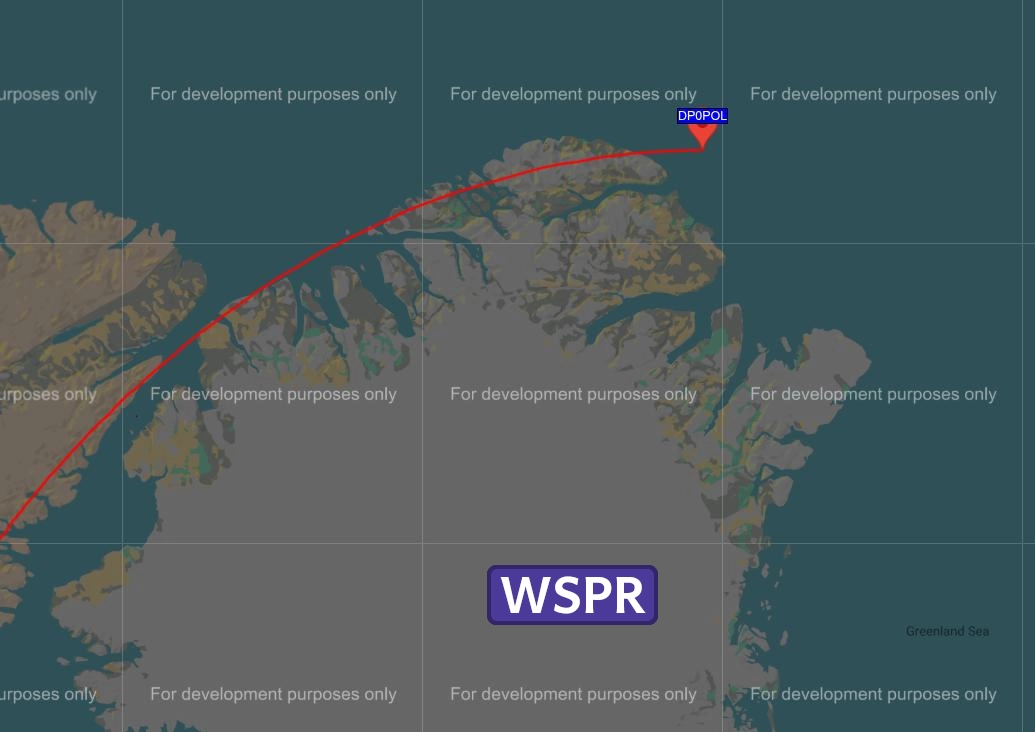
This one in the arctic is especially interesting. It is the Research Vessel “Polarstern.” You can track its real-time location at this website.
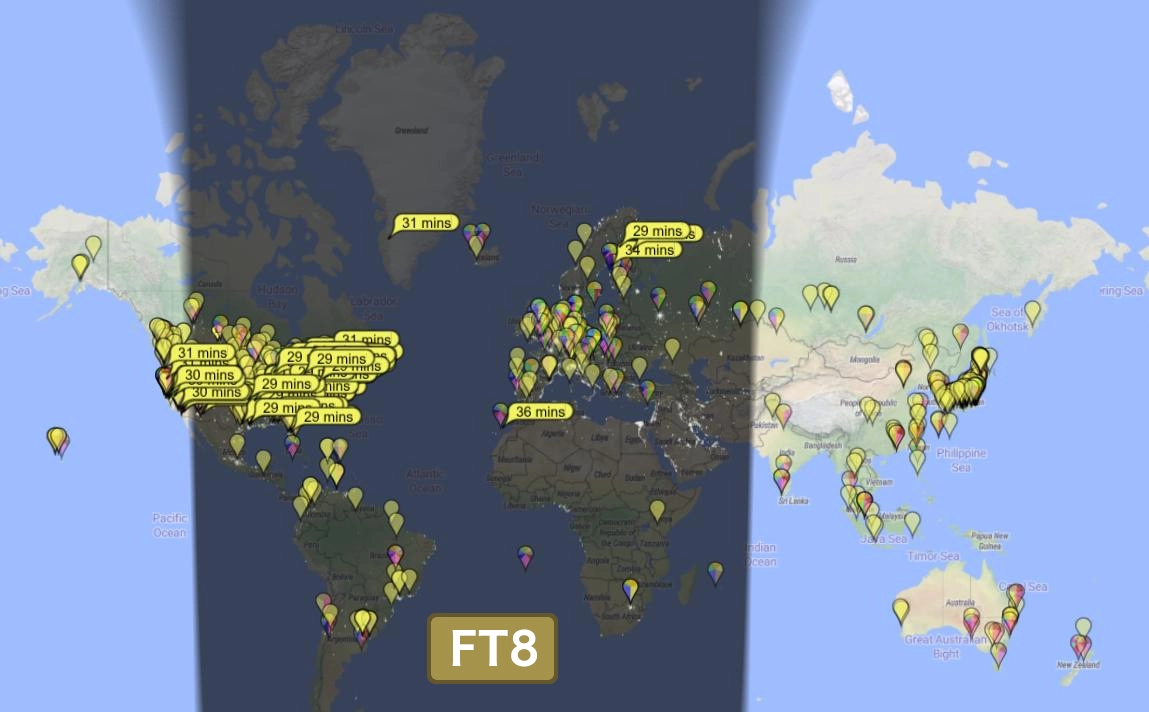
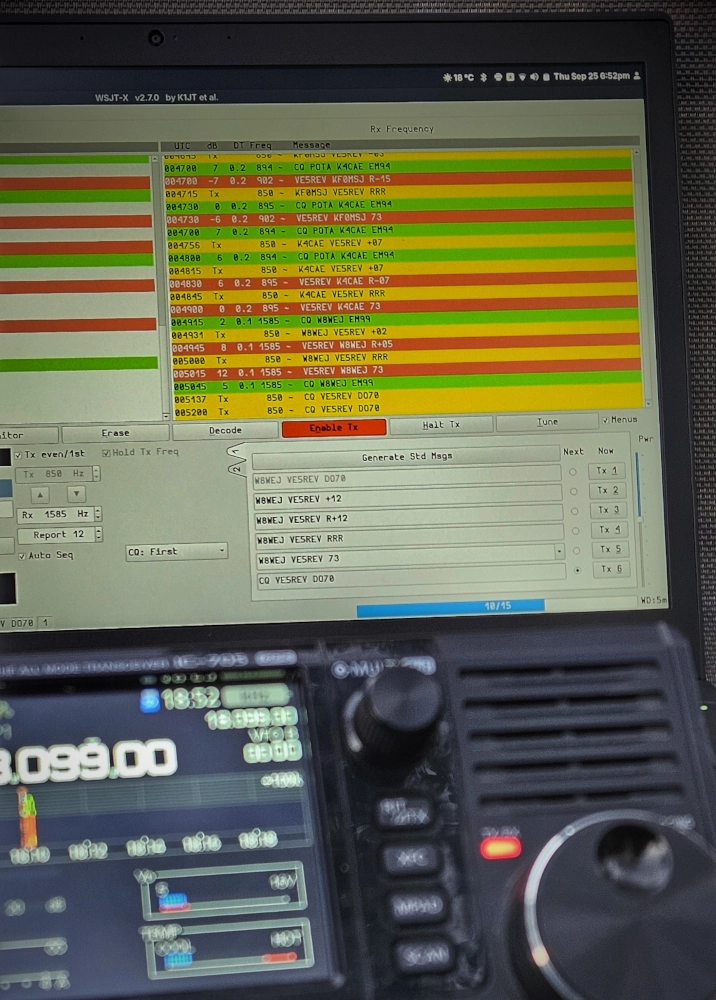
For fun I did a little 5 watt QRP FT8 operating. I hunted a couple POTA stations and made a few other general contacts, mainly to populate PSKReporter to see how it did. It never ceases to amaze me how far the digital signals can get with so very little power.
POTA
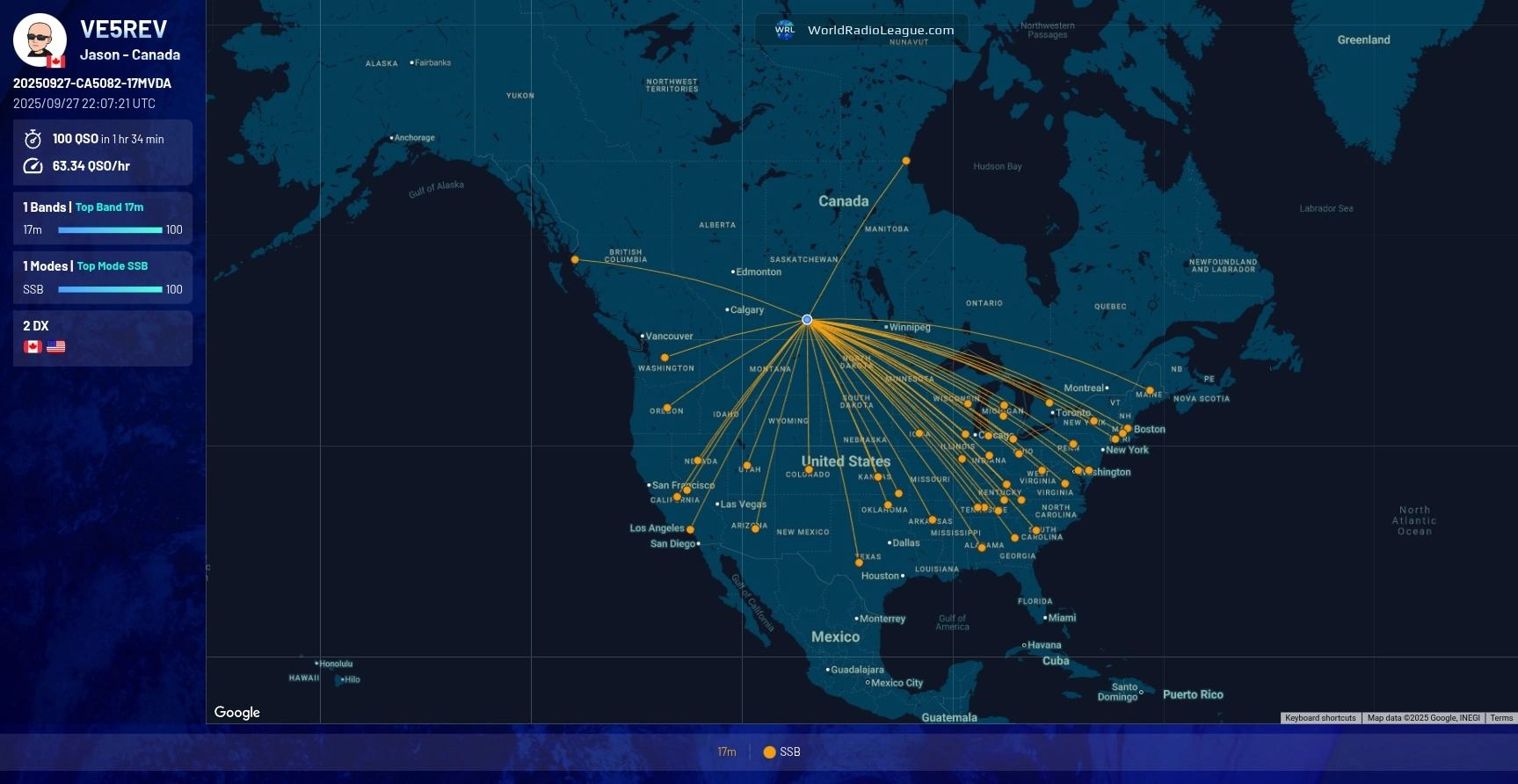
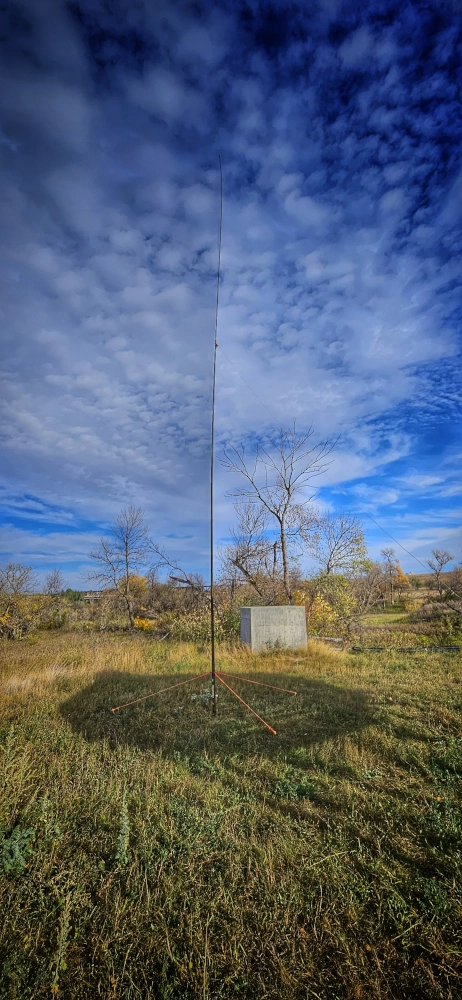
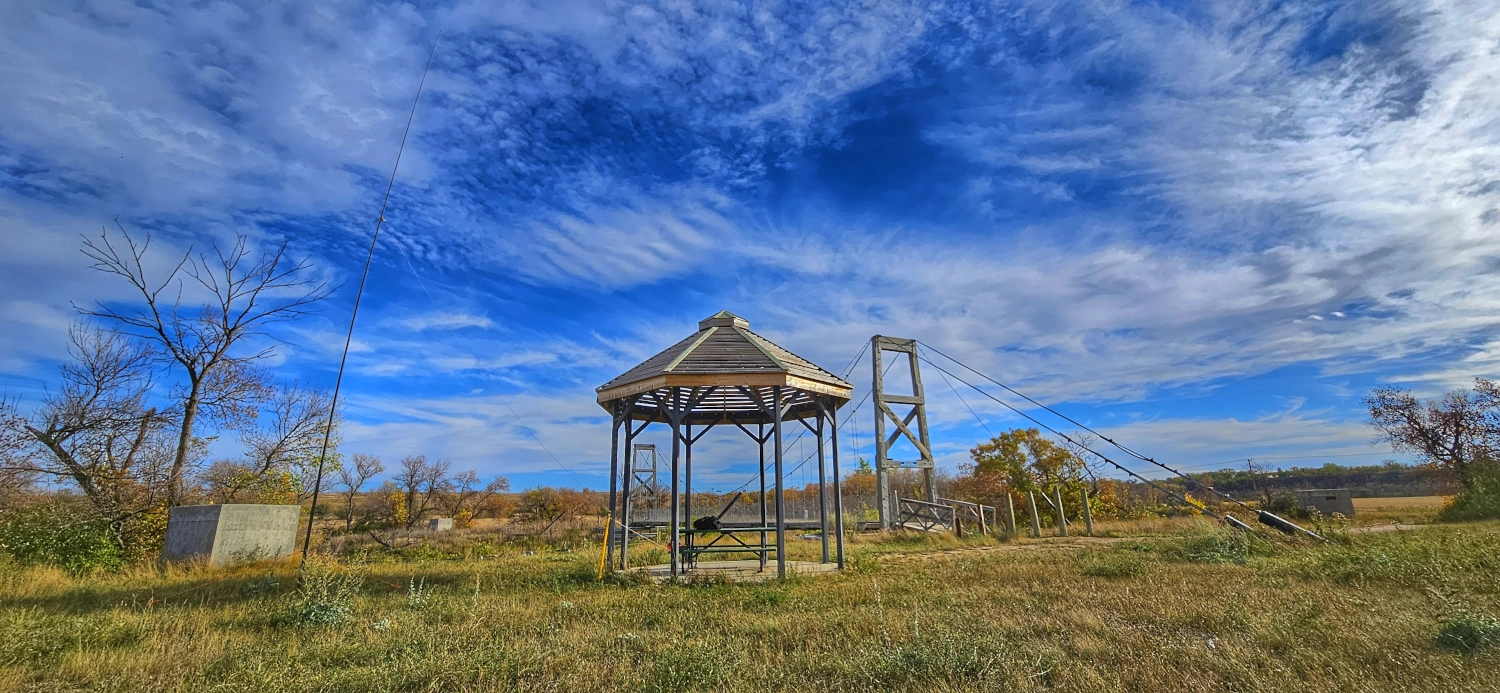
I did a POTA activation at CA-5082 - The Trans Canada Trail, with this antenna on September 27, 2025. I got 100 SSB contacts in an hour and a half. 33 States and Provinces with the furthest contact being 2,755.6KM. Not too shabby!
Conclusion
I was pleasantly surprised with this build. It’s a pretty straightforward build and it deploys very quickly. You could cut elements for a few different bands, especially 10M. I have a feeling this will really sizzle on 10M. My first thought with this antenna is to take it out to Old Wives Lake - a natural salt lake that isn’t too far away. It’s a 2fer POTA spot too if you go to the right spot (CA-2782, CA-2783). If it works out well in a real world POTA test, I think that VE5ARV and I will work up a 3D print version of the choke balun center and make it available for the HamFam.
73 de VE5REV