Big Loops

I really love loop antennas. In my Delta Loop posts, 1 and 2, I was working with a vertically oriented 20M loop. I found that a 2:1 hybrid balun was a better match than the 4:1 for using it as a mono-band antenna. But my attentioned turned to making huge, horizontally oriented loops. Our radio club still has zillions of feet of that fine aircraft cable so sourcing the wire is no problem.
For Loop Antenna theory, check out this awesome Practical Antennas article. And also see Lord Callum’s Video.
Balun Builds
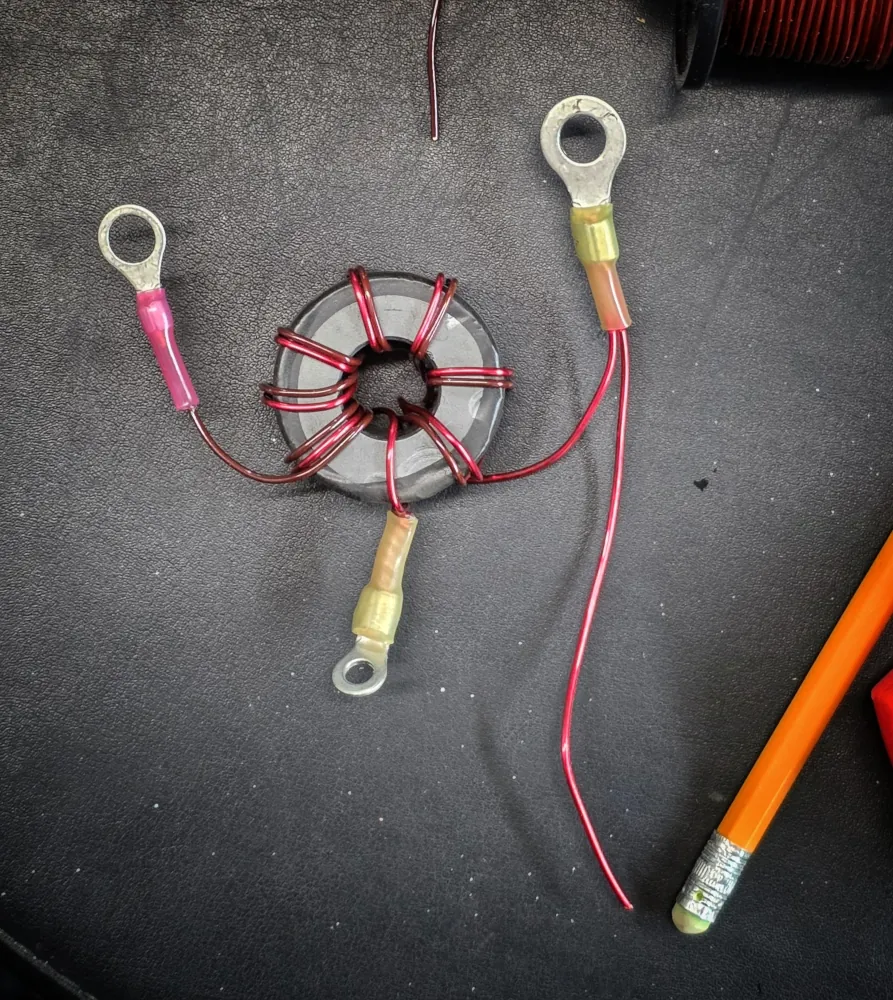
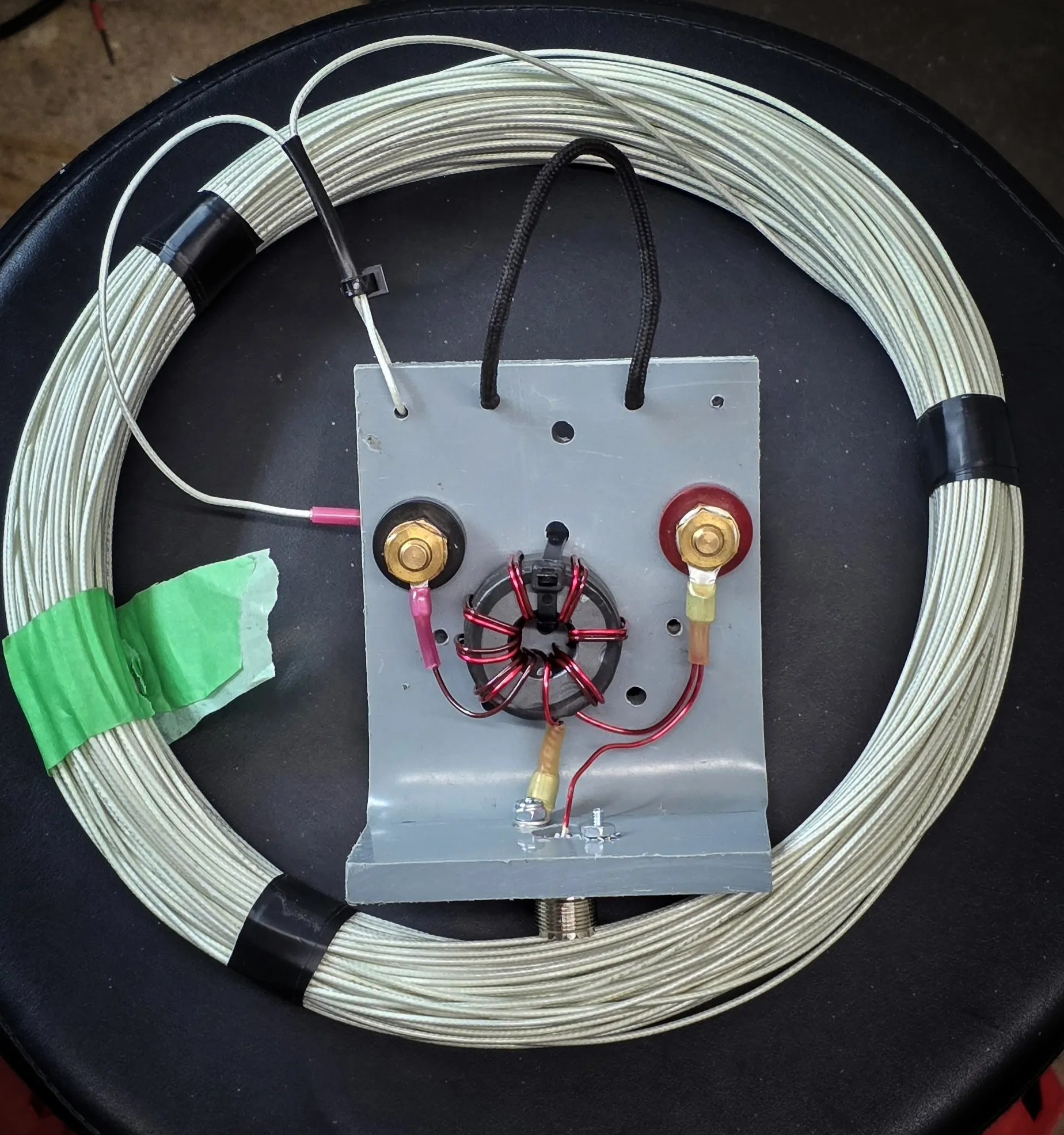
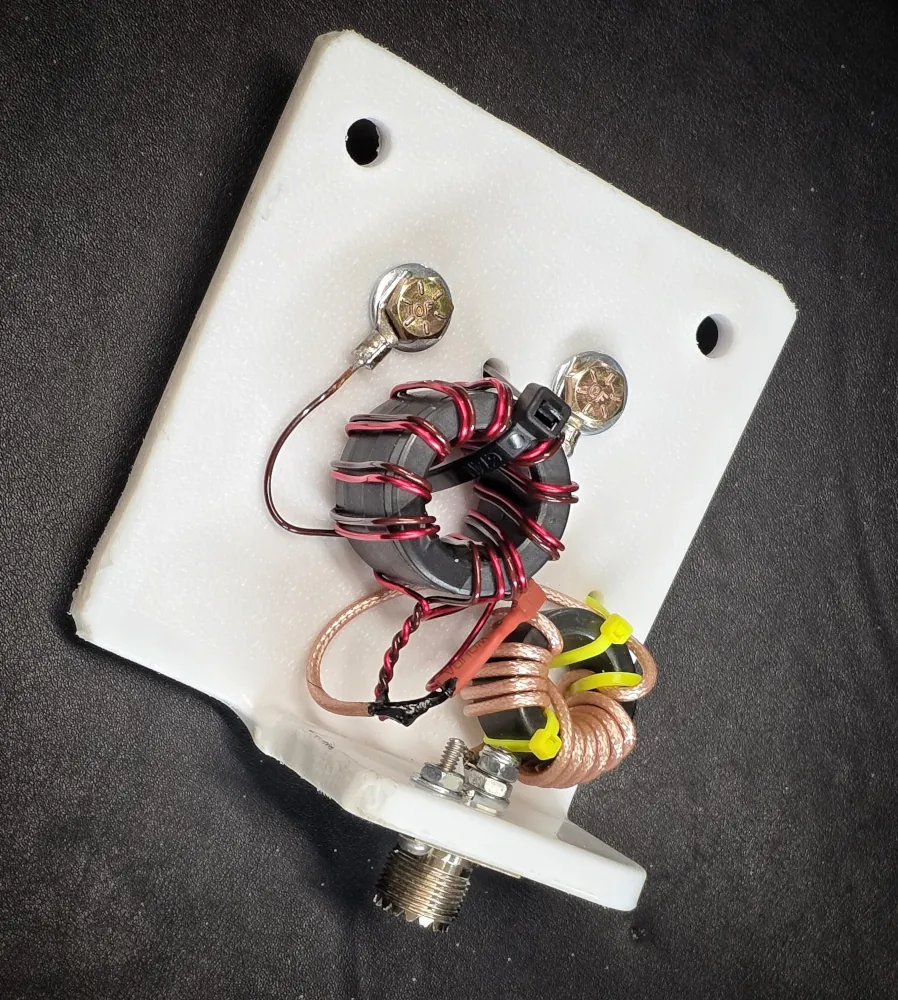
Because these loops will be used for multi-band operation, I went with the good ol’ 4:1 balun. I built two of them, one for an 80M and one for a 40M loop. For the 80M loop I went with a ‘Fatty 43’ core (Size: 1.540” Dia (39.12mm) OD. Core: 2643251002) and for the 40M I went with two Type 61 cores (Size: 1.400” (35.56mm) OD. Core: 5961002701). The logic here is that the Type 43 has proven better for the lower bands while the 61 shows better results for the higher bands. Both of these builds are meant as temporary deployments. Nothing is well sealed as they should be for permanent setups.
80M 4:1
For this build I used glue-lined crimp terminals. I really like how this turned out. It was quick, clean and really secure. I mounted the core onto a piece of plastic puck board. I heated it up and put it in a vice to make the bend for the SO-239 connector. It’s a pretty robust base!
40M 4:1
For this one I built it as a hybrid balun. It includes a 1:1 choke made from a Type 31 core (Size: 1.142” (29.01mm)OD. Core: 2631801202) and RG-316 coax. I had a scrap piece of cutting board for the base and I likewise heated it up and bent it. Again, it’s a pretty robust build. I added some extra strain relief holes for the antenna wire.
Field Day Deployment
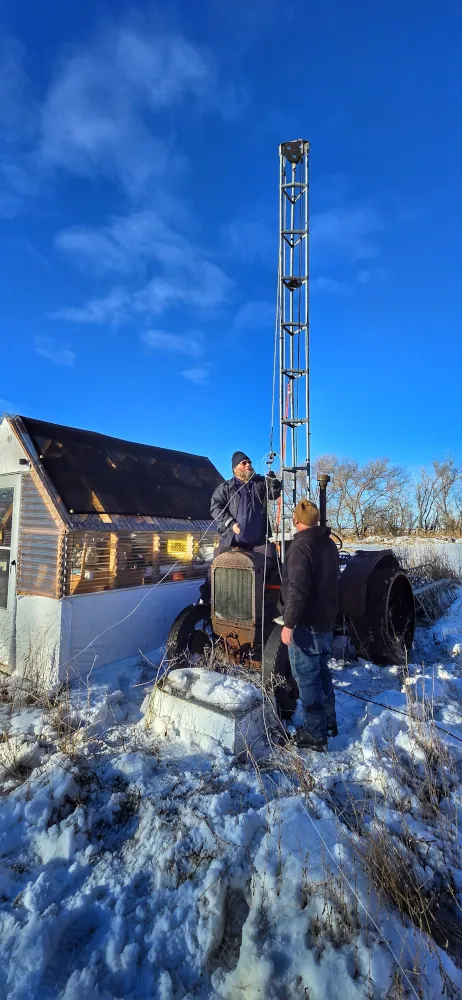
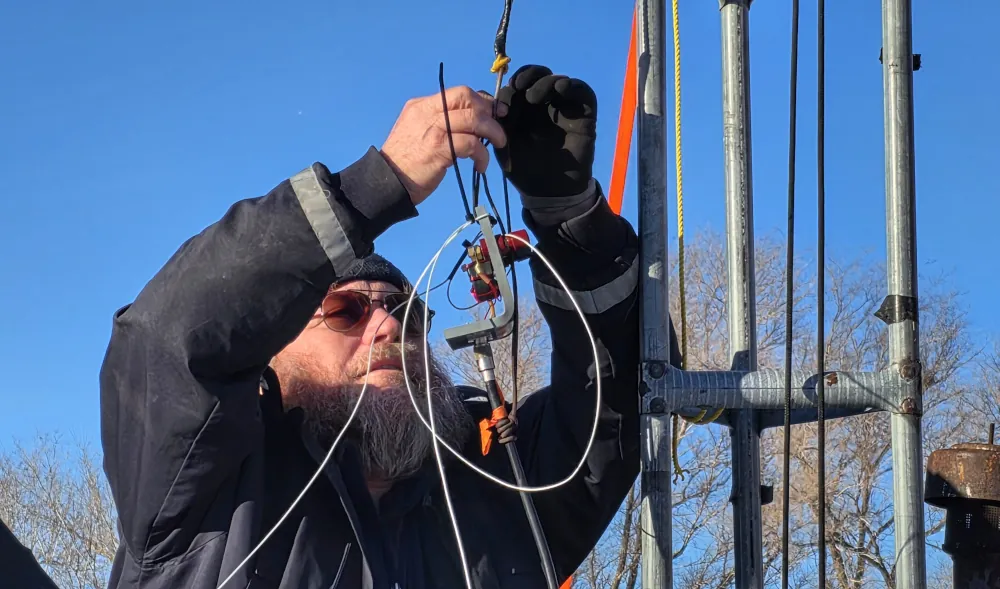
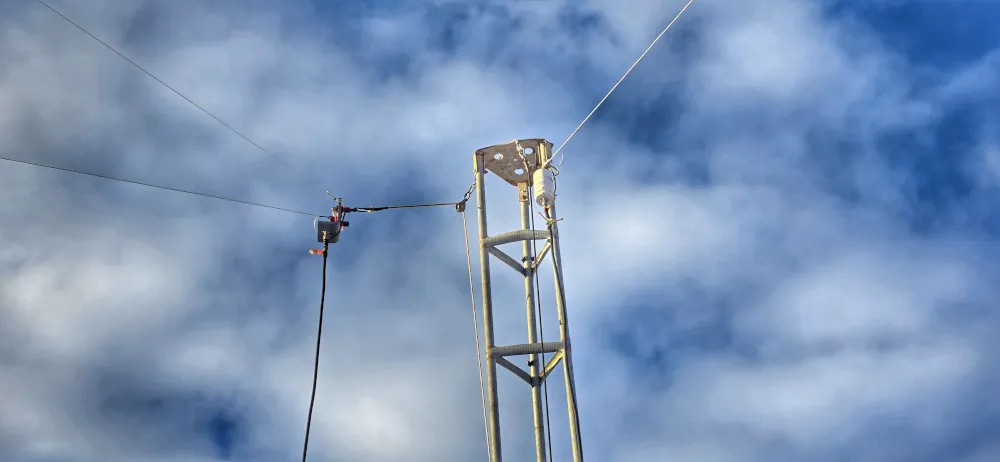
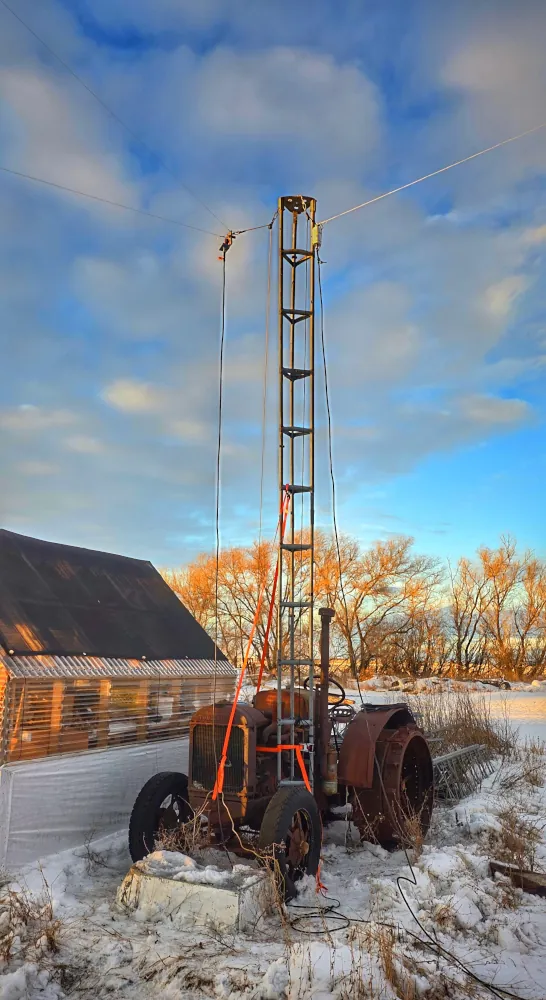
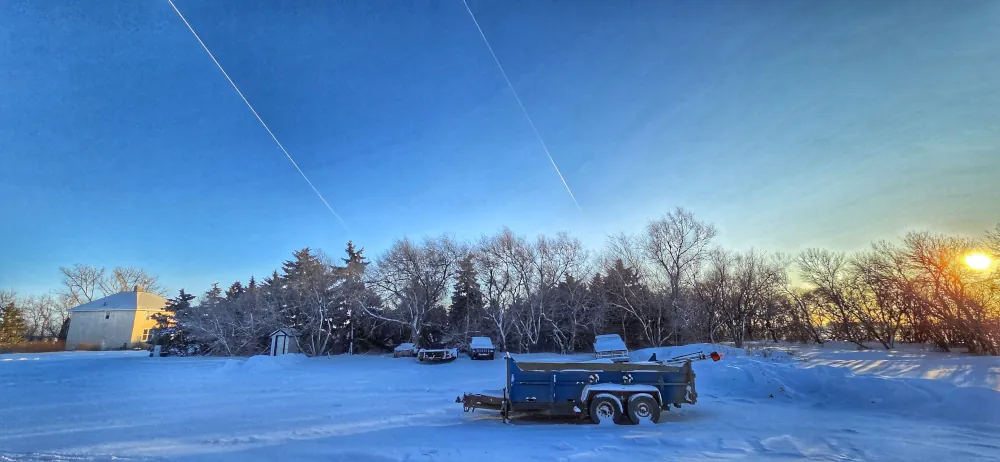
The other magical thing about these big horizontal loops is that they don’t have to be super high up to work well. Obviously, height is always might so the higher the better. But as in Callum’s video (referenced above), they will work very well even at lower deployments. For 2026 ❄️ Winter Field Day we deployed the 80M loop and it is only 15’-20’ up. We built a mast out of some spare tower sections and a McCormick-Deering tractor! The other antenna is the 160M EFHW with an upgraded Balun. The Loop was deployed from North to South in a narrowish rectangle. The EFHW was deployed West to East/South East as a lazy inverted L.
NanoVNA Measurements
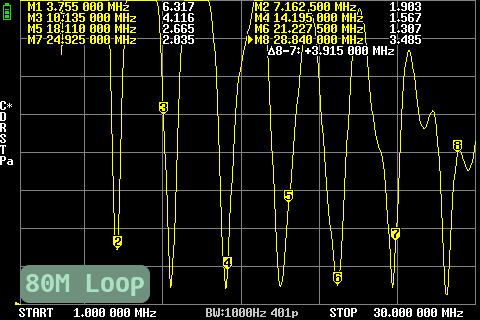
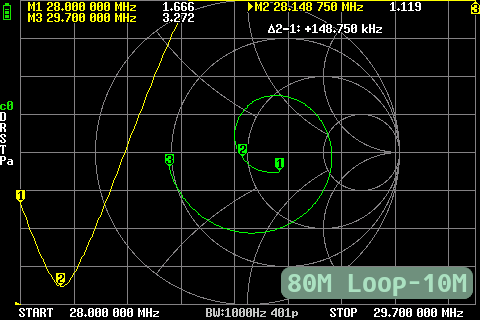
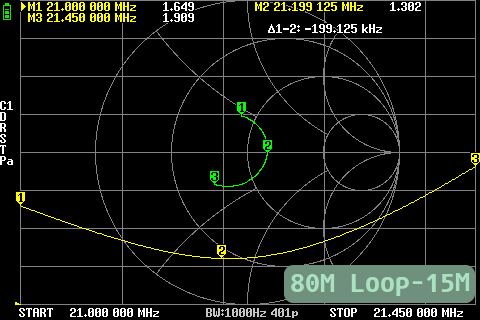
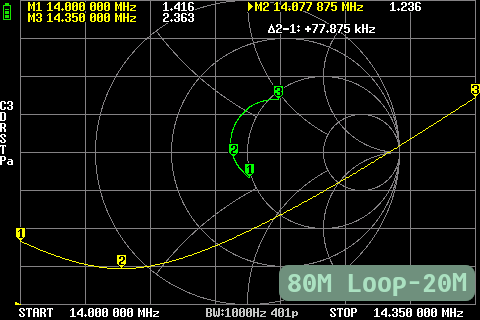
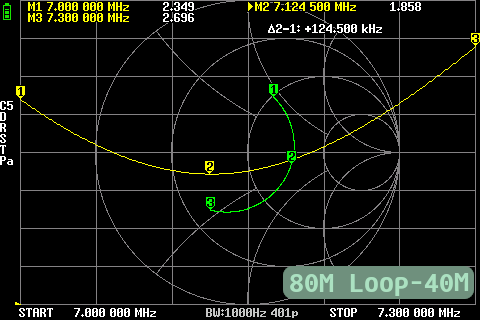
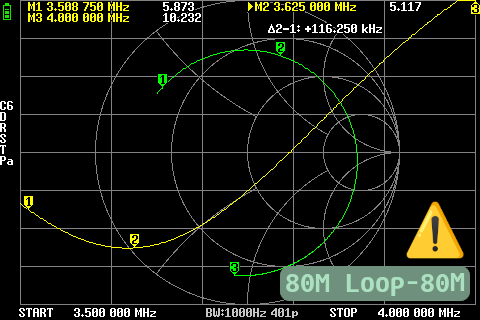
With any multiband antenna, I’m always trying to get SWR to no more than 3:1 so that an internal rig tuner can deal with it. We adjusted the 80M loop until we had 20M pretty close. It showed good results from 10M-40M. 80M itself was a bit concerning. I think this had to do with deployment height. It was way too low for 80M. However, we were able to tune the low end of 80 with just the Icom 7300 internal tuner.
Field Day Results
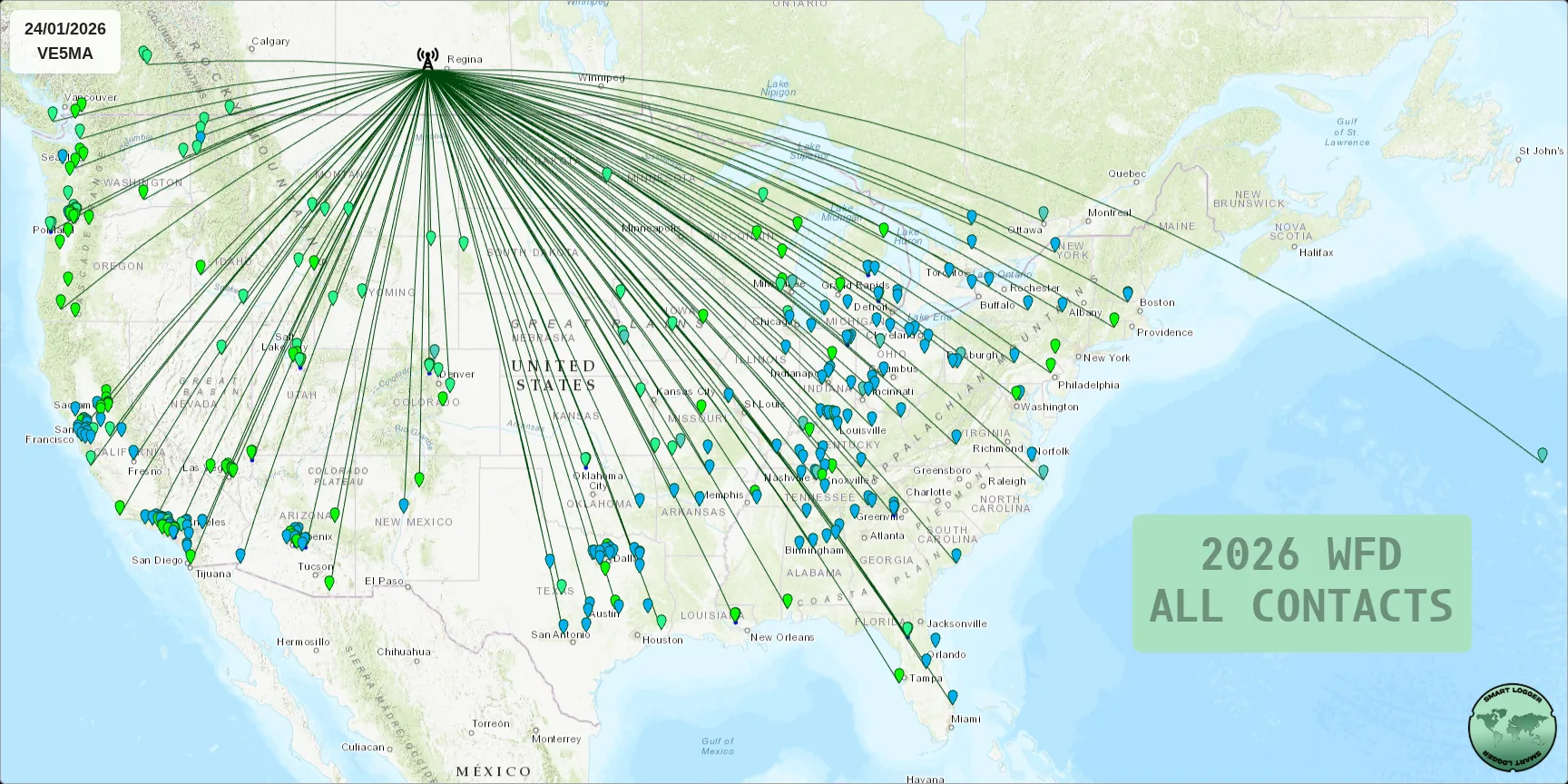
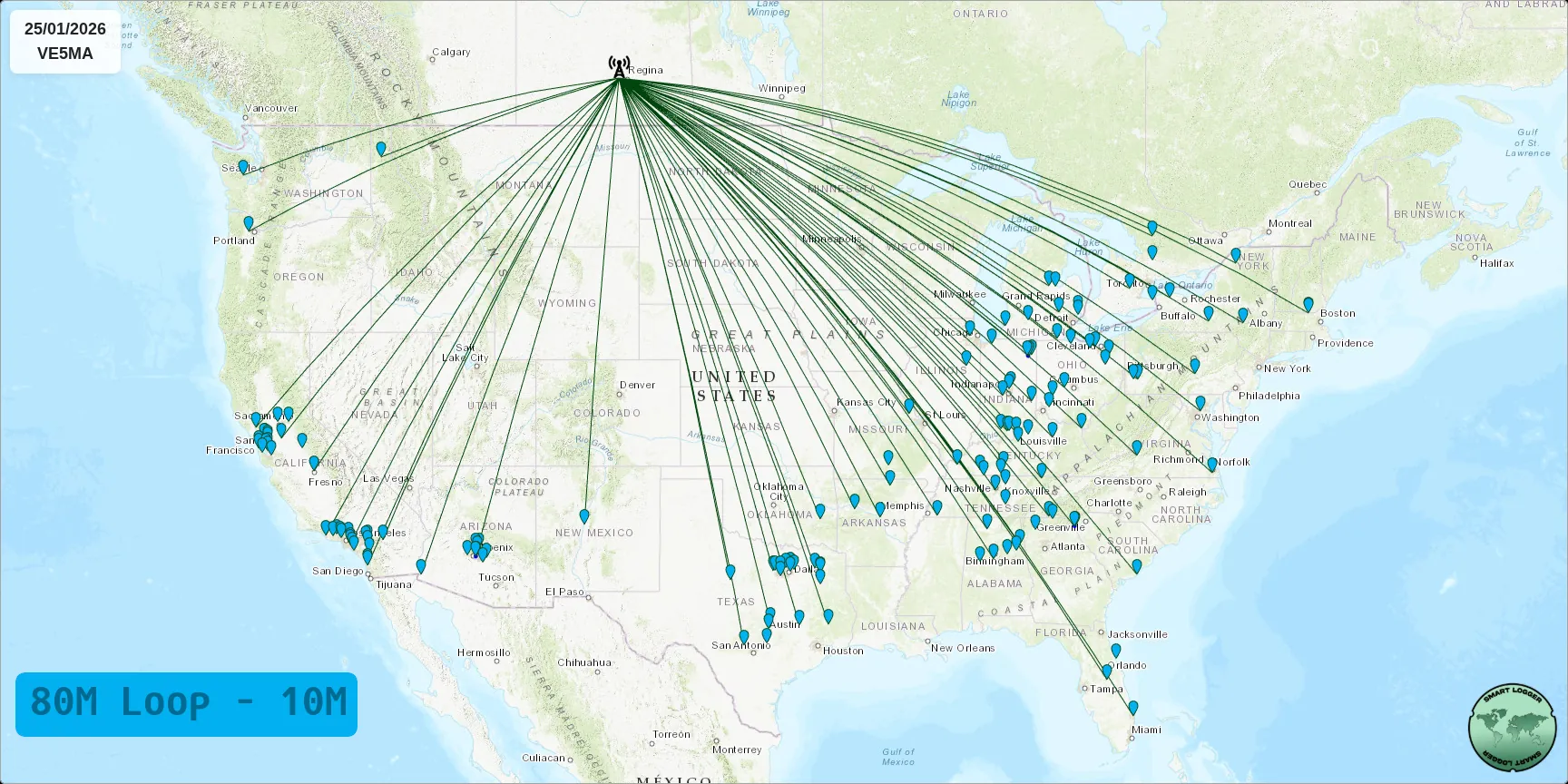
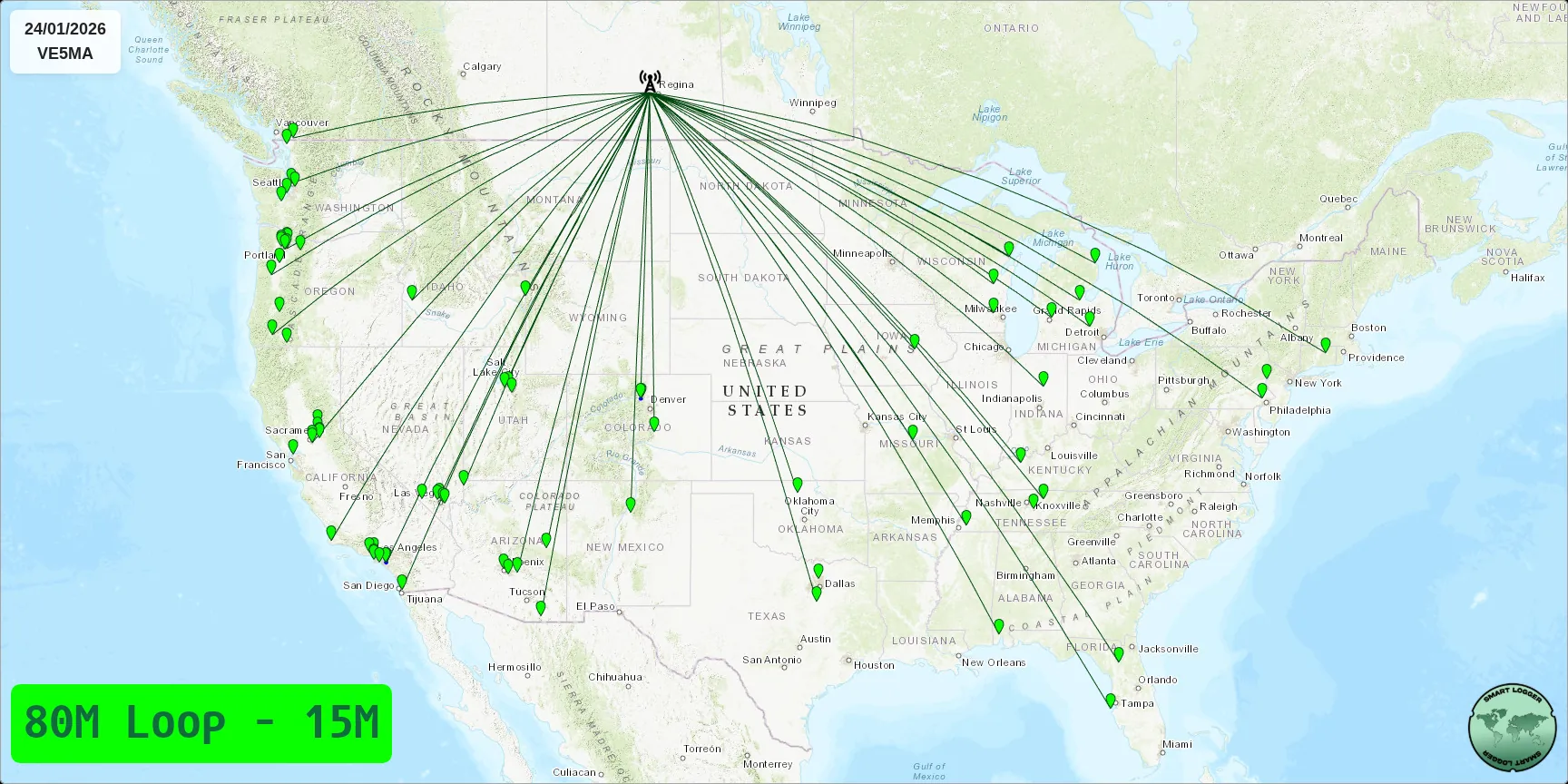
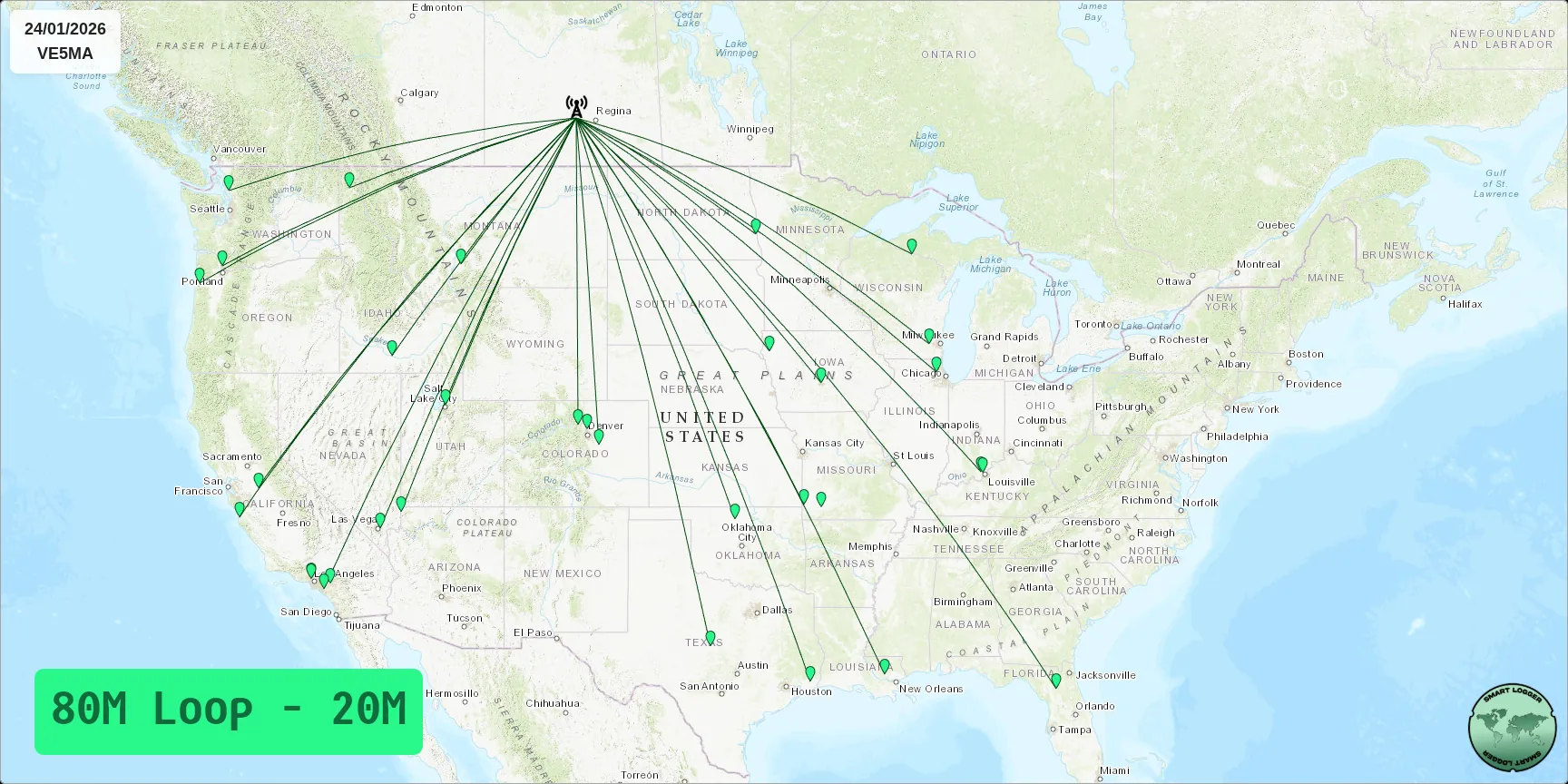
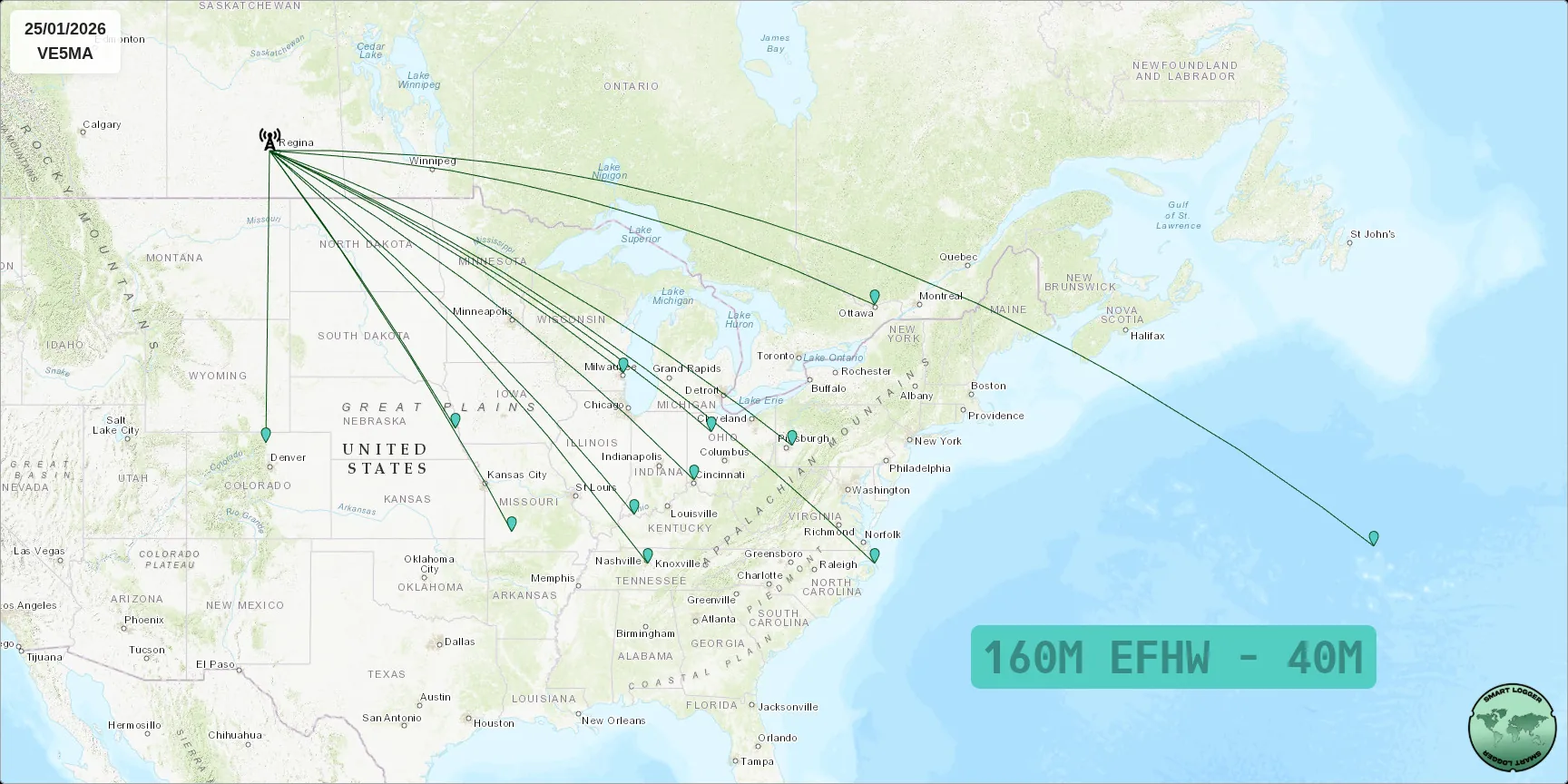
We got to give this antenna a really good workout at Winter Field Day. We made SSB contacts on 10, 15 & 20M bands. 40M contacts were exclusively CW and they were all made on the EFHW. I include them here to show the propagation difference between the loop and the EFHW. We tried to make 80M and 160M contacts but had poor conditions. All in all we made 360 contacts.
Analysis
We were very impressed with the 80M Loop antenna! It was relatively easy to deploy and we had lots of space. The 10M and 15M bands were very omni-directional and they pattern much like a 1/4 wave vertical. 20M in contrast shows a pretty substantial null to the East. This may be because our 20M station was mainly hunting stations rather than calling. Being that we’re a pretty rare station I was able to wrack up loads of contacts on the 10M and 15M bands by calling. This may account for the wider/omni-directional spread of the other bands. The 40M EFHW contacts were noticeably more directional. This antenna was also incredibly quiet on receive. Granted, we were out in the country with very little noise, but the characteristic quietness was very pronounced. I’m thinking this could be an ideal urban antenna, particularly a 40M or 20M version which may be easier to fit in space-wise. All in all, this was a great Field Day antenna!
73 de VE5REV